
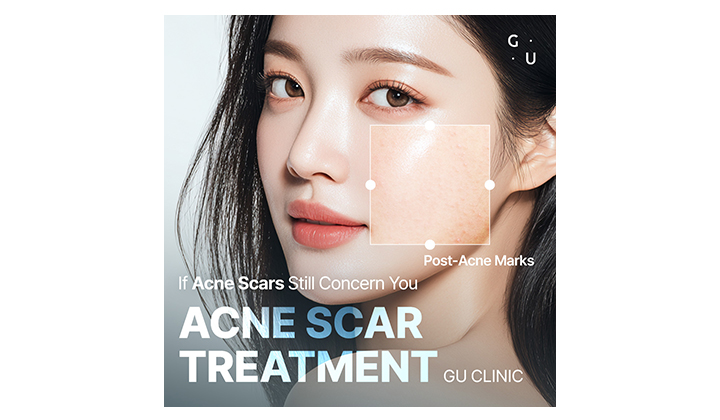
Juvgen Scar Treatment: Why Personalization Matters
Scar treatment should be based on more than price. Learn why scar type, depth, skin thickness, and tissue adhesion matter when planning personalized Juvgen treatment.
Hello.
I am Dr. Ki-Beom Park,
Medical Director of Glow Up Clinic,
where we help you rediscover
the beauty that is uniquely yours.
"Q. What should you check
before comparing
the cost of scar treatment?"
A. Scar treatment should begin with an assessment of
the scar shape and depth, skin thickness,
and the degree of tissue adhesion.
Even when the same Juvgen treatment is used,
the treatment intensity, area, and number of sessions may vary
depending on the skin condition and scar type.
For this reason, it is more important to confirm
whether a personalized treatment plan has been created
than to compare price alone.
When searching for scar treatment or Juvgen,
cost is often the first factor people compare.
Reviewing prices at different clinics can be useful,
but scars vary greatly in shape and tissue condition,
so treatment decisions should not be based on cost alone.
Even with the same Juvgen procedure,
the approach may differ according to the scar type and depth,
skin thickness, healing capacity, and previous treatment history.
The treatment area and intensity, as well as whether
other procedures should be combined, also need to be considered.
A detailed structural assessment of the scars should therefore come first.
"Scars May Look Similar,
but Each One Is Different"
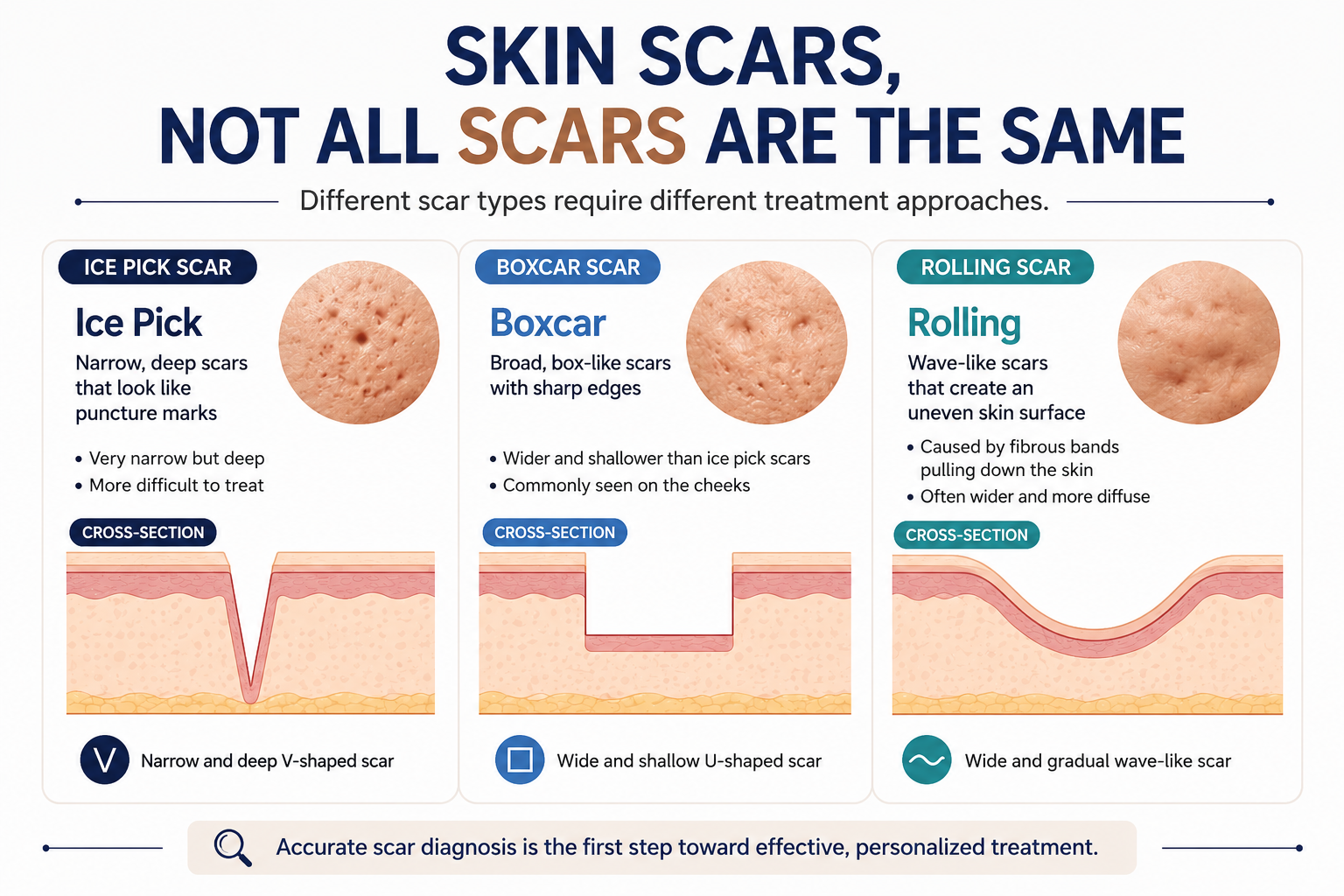
Skin scars do not appear in a single form.
Common acne scars include narrow and deep ice-pick scars,
boxcar scars with relatively defined edges, and rolling scars
that create broader, gently depressed areas.
Even on the same face, scar shape
and depth can vary from one area to another.
Older scars and more recent scars may also differ in
tissue adhesion and healing status.
Rather than applying the same intensity
and method to every scar, treatment should be adjusted
according to the characteristics of each area.
The depth and shape of the scars, skin thickness,
and the degree to which the underlying tissue pulls
the surface downward should all be assessed before deciding
which areas to treat and how to approach them.
This allows treatment to address the underlying scar structure
rather than simply stimulating the skin surface.

"The Details
That Matter More Than Cost"
Here, detail does not simply mean performing the procedure carefully.
It refers to the entire planning process:
identifying the scar type, assessing skin thickness and healing capacity,
and creating a treatment plan suited to the individual skin condition.
Scar treatment involves many variables,
including treatment intensity, treatment area,
the expected number of sessions,
and whether other procedures should be combined.
Even with the same Juvgen treatment,
the direction of treatment and the level of satisfaction may differ
depending on whether these factors have been properly assessed.
Scar treatment is rarely completed in a single session.
The plan often needs to be adjusted step by step
while observing how the skin responds and how the tissue heals.
Instead of focusing only on the lowest price,
it is important to understand how the scars are assessed
and how each stage of treatment is planned.
"Juvgen for Depressed
Scar Structure"
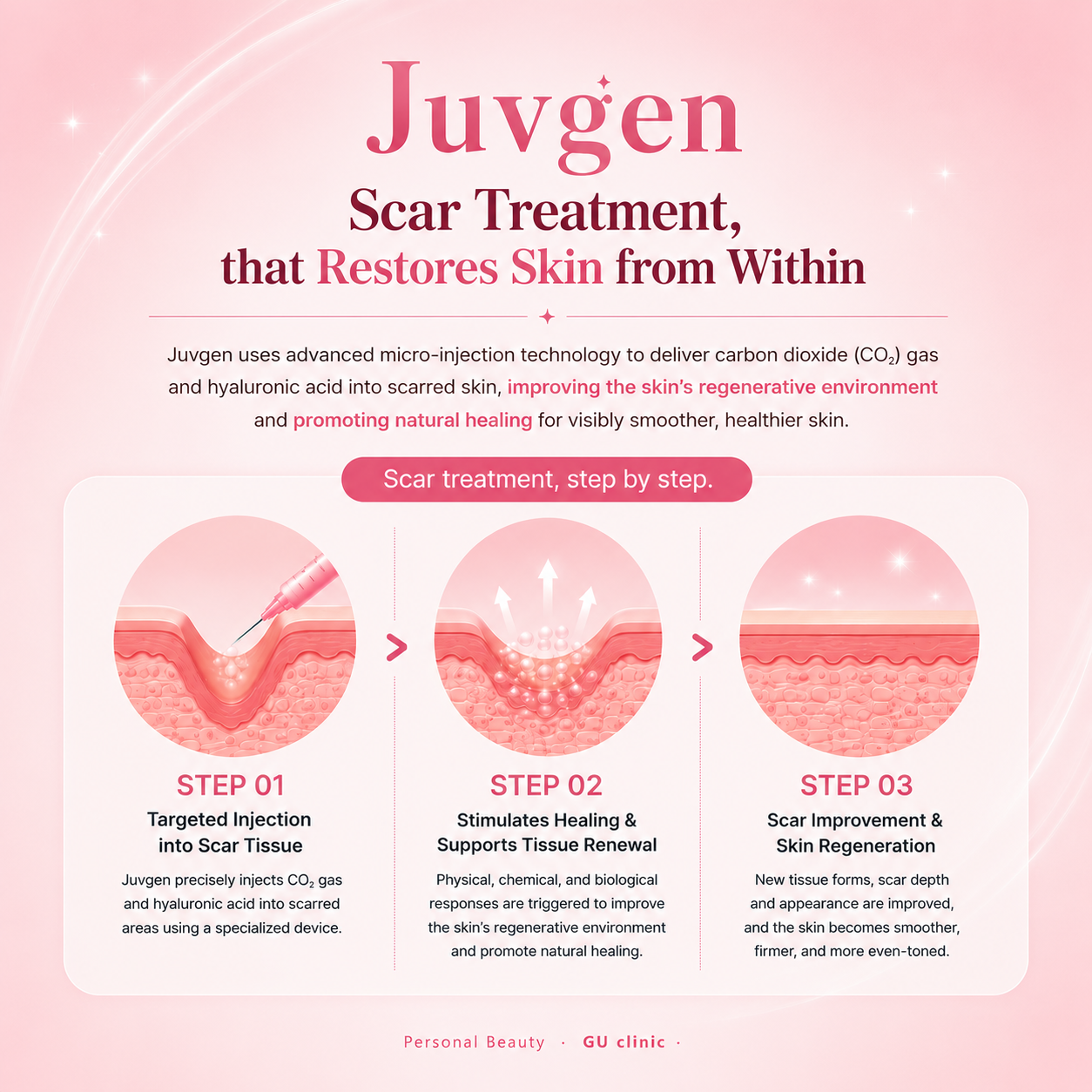
A depressed scar is not simply a hollow on the skin surface.
It may appear deeper when the collagen structure
in the dermis has been damaged, tissue regeneration has been incomplete,
or fibrous tissue beneath the skin has become attached
and pulls the surface downward.
Juvgen uses carbon dioxide and hyaluronic acid to
create physical space beneath the depressed area
and support a more favorable environment for skin recovery.
Radiofrequency energy and air pressure may then be used to
help release scar tissue that is pulling the skin downward.
Older depressed scars are more likely to
involve firm adhesions beneath the skin, so the depth and extent of
the adhesion should be carefully assessed.
Because each scar requires a different level of stimulation,
treatment intensity and the number of sessions
should be adjusted while monitoring the skin response.
Scars usually improve gradually as the skin goes through
its recovery process rather than changing
dramatically after a single treatment.
The number of sessions and the recovery course may vary
depending on the individual skin condition and scar characteristics.

"An Approach Based on Scar Type and Adhesion Depth"
Scar treatment can be compared to smoothing an uneven surface.
Addressing only the depressed area may not be enough.
The tissue pulling the skin downward may also need to
be treated so that the surface can appear more naturally refined.
When creating a treatment plan,
it is important to consider the scar depth and distribution,
skin type, active inflammation, previous procedures, and recovery speed.
Even scars on the same cheek may require different approaches
depending on whether the skin is thin or thick, prone to redness, or sensitive.
When considering Juvgen, look beyond price alone.
It is important to confirm whether the scar type
and degree of adhesion are accurately assessed and
whether the treatment area and intensity are carefully adjusted to
suit the condition of your skin.
Dr. Ki-beom Park(Chief Medical Director) - B.S. in Biotechnology, College of Engineering, Yonsei University - M.D. Yonsei University College of Medicine - Adjunct Professor, Graduate School of Integrative Medicine, CHA University - Co-founder of Gangnam Unni, a medical aesthetics information platform - Operator of Healing Breeze, a medical service organization (MSO) - Developer of GENABELLE, a K-Derma cosmetics brand - Developer of the CELLORA of GU brand |