

Thread Lifting for Sagging Areas
Which Type Is Right for Me?
Naturally Lifted, Perfectly You, GU Clinic Thread Lift
| Thread Type | Description |
|---|---|
| JAMBER Thread | Barbless spring-coil design |
| Mint Thread | 360° multidirectional 3D barbs |
| APTOS Thread | Precision-molded barbs with a consistent angle |
Seoul Gangnam Thread Lift Types Explained
Compare the benefits and considerations of different thread lift options for sagging skin.
Thread Lifting for Sagging Areas
Which Type Is Right for Me?
Naturally Lifted, Perfectly You, GU Clinic Thread Lift
| Thread Type | Features |
|---|---|
| JAMBER Thread | Barbless spring -coil design |
| Mint Thread | 360° multidirectional 3D barbs |
| APTOS Thread | Precision-molded barbs with a consistent angle |
Hello,
I’m Dr. Ki Beom Park, Medical Director of GU Clinic.
During thread lift consultations, I often hear questions such as:
'There are so many types of threads. How do I choose?'
'Does a well-known thread necessarily deliver better results?'

Even after researching the options, it can be difficult to understand
which one is right for you because every thread has a different structure and purpose.
In this article, we will compare
three thread lift options: Jamber, MINT, and Aptos.
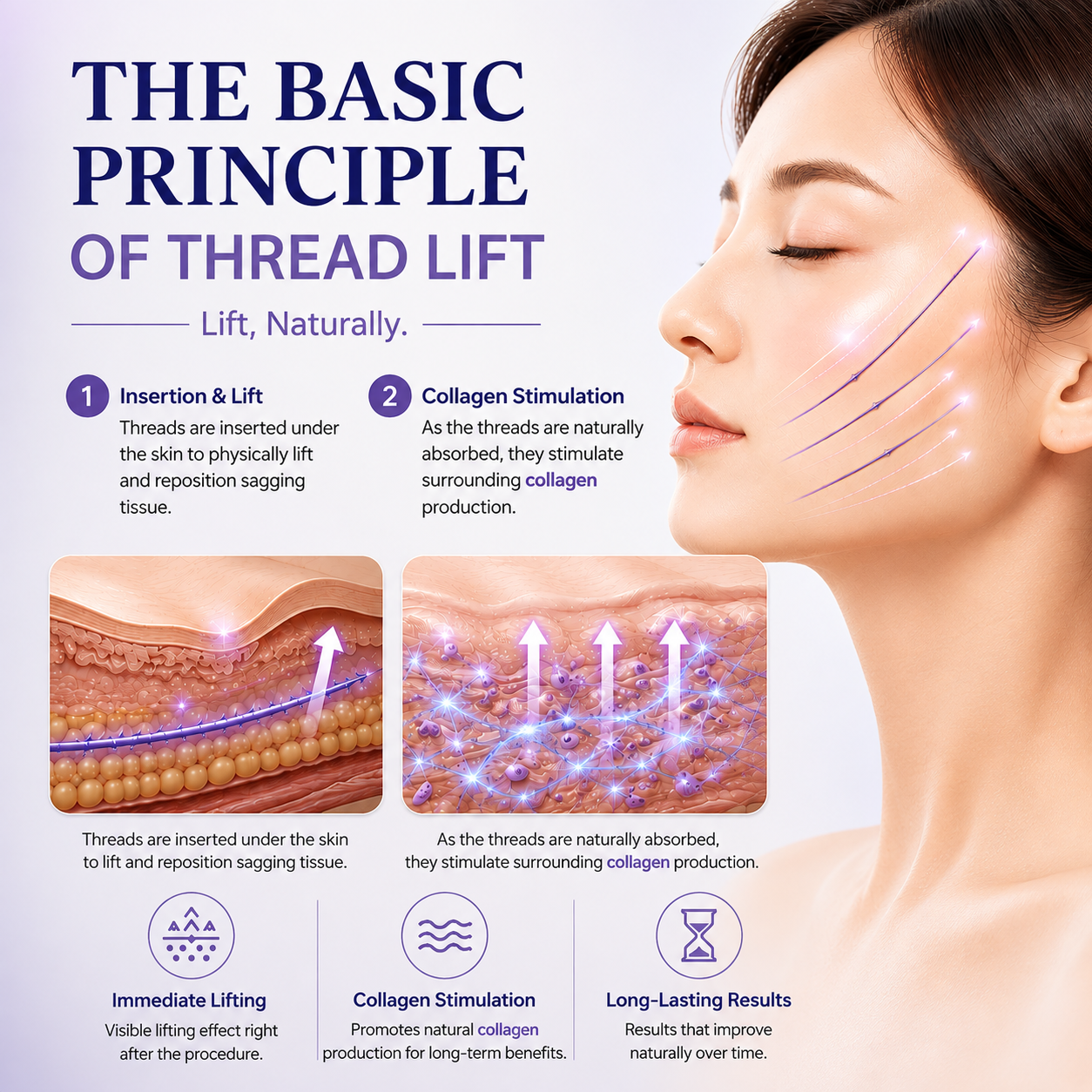
THE BASIC PRINCIPLE OF THREAD LIFT
Lift, Naturally.
| Step Number | Title | Description |
|---|---|---|
| 1 | Insertion & Lift | Threads are inserted under the skin to physically lift and reposition sagging tissue. |
| 2 | Collagen Stimulation | As the threads are naturally absorbed, they stimulate surrounding collagen production. |
| Benefit | Description |
|---|---|
| Immediate Lifting | Visible lifting effect right after the procedure. |
| Collagen Stimulation | Promotes natural collagen production for long-term benefits. |
| Long-Lasting Results | Results that improve naturally over time. |
"How Does a Thread Lift Work?"
Before comparing the different types of threads,
let’s first look at how a thread lift works beneath the skin.
Thread lifting generally works in two ways:
Threads placed beneath the skin provide physical support
or reposition sagging tissue.
As absorbable threads gradually break down,
they may stimulate a collagen-remodeling response in the surrounding tissue.
The insertion of the threads triggers a controlled tissue response,
which can support new collagen formation
and gradually improve firmness around the treated area.
The balance between physical lifting, structural support,
and collagen stimulation varies depending on the type of thread used.
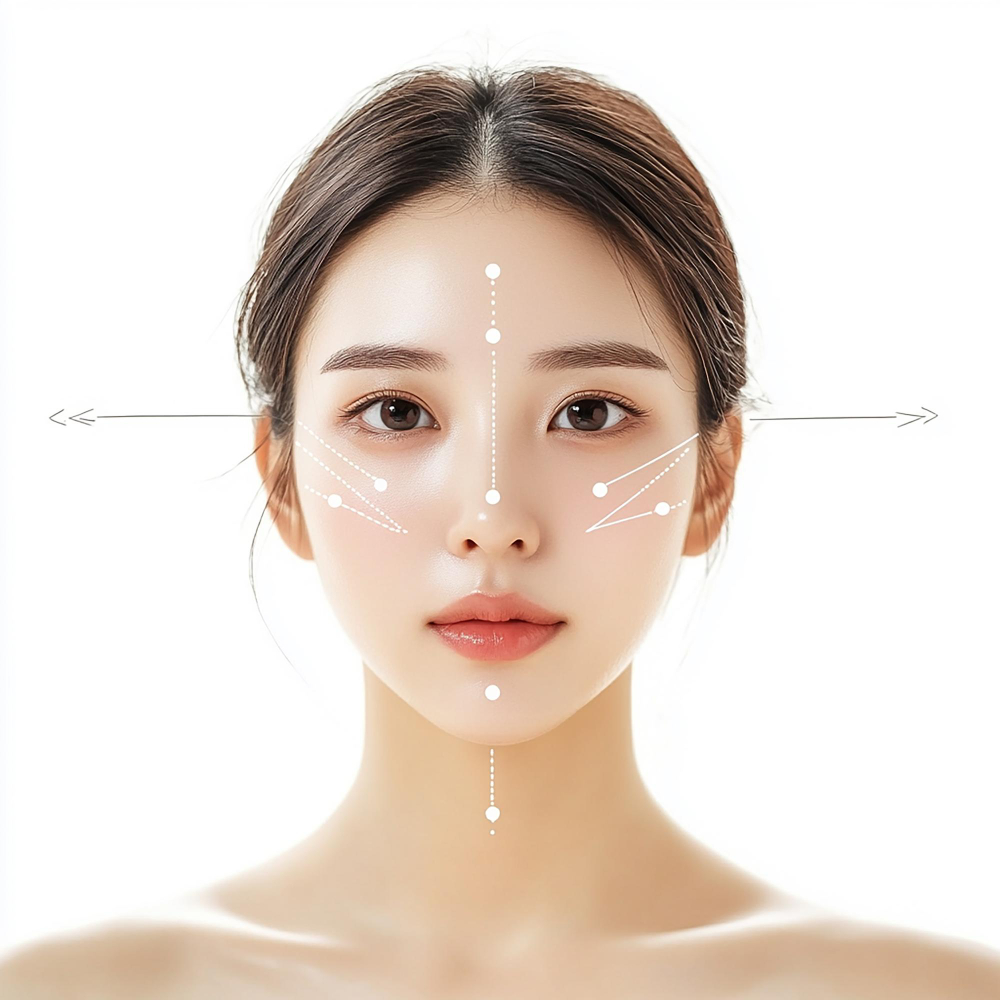
"Thread Lift Options in Seoul and Gangnam:
Jamber vs. MINT vs. Aptos"
Jamber thread | Mint thread | Aptos thread | |
Structure | Spring-shaped coil | Molded 360° helical cogs | Bidirectional or multidirectional cogs, depending on the product |
Material | Absorbable PDO | Absorbable PDO | P(LA/CL); hyaluronic acid technology is used in selected products |
Primary role | Internal support for hollow or sunken areas | Lifting and repositioning sagging tissue | Repositioning tissue across the mid and lower face |
Common treatment areas | Tear troughs, nasolabial folds, nose, and areas with volume loss | Jowls, submental area, sagging cheeks, and jawline | Mid-to-advanced laxity across the midface and lower face |
The key differences lie in each thread’s structure, material, and intended role.
Jamber threads have a compressed spring-like structure.
Rather than strongly pulling sagging tissue,
they are generally used to provide internal support in hollow areas,
including the under-eye region, nasolabial folds, and areas of facial volume loss.
Their flexible shape allows them to adapt to facial movement.
MINT threads are PDO cog threads featuring molded, 360-degree helical barbs.
These cogs grip tissue from multiple directions,
making them suitable for areas that require lifting
and repositioning, such as the cheeks, jowls, and jawline.
Aptos refers to a range of threads available
in different structures and materials.
Absorbable Aptos threads commonly use P(LA/CL),
while selected products incorporate hyaluronic acid technology.
Depending on the product, multidirectional cogs may be used to
reposition tissue across the midface and lower face
while supporting gradual collagen remodeling.
Many other thread options are available,
but the result depends less on the name of the product
and more on whether its structure suits your facial anatomy and treatment goals.
▶ Find the Right Thread for You

"How Should the Right Thread Be Selected?"
Although each thread has its own characteristics,
the most important question is not which product is the most popular.
It is whether the thread is 'appropriate for your current condition'.
If noticeable sagging requires stronger tissue repositioning,
a cog thread with sufficient lifting capacity may be considered.
If internal support, a subtle result,
or a shorter recovery period is the priority,
a softer or spring-shaped thread may be more suitable.
The absorption rate and expected duration of each thread can also affect future treatment planning.
If returning to everyday activities quickly is important, potential swelling,
tightness, bruising, and foreign-body sensation should also be discussed beforehand.
The final choice should be made after assessing your skin thickness,
facial fat distribution, degree of laxity, and desired outcome during a consultation.

"Choosing the Right Thread
Is Not Always Easy on Your Own"
Researching the different types of thread lifts
can help you understand the options available.
However, the thread you initially have in mind
may not be appropriate once your degree of
laxity, skin thickness, elasticity, and facial structure have been assessed.
When considering a thread lift in Seoul Gangnam,
look for a clinic that evaluates the cause and direction of sagging
before selecting the thread type, number of threads,
insertion depth, and lifting vector.
This has been Dr. Ki Beom Park,
Medical Director of GU Clinic.
Thank you for reading.
Dr. Ki-beom Park(Chief Medical Director) - B.S. in Biotechnology, College of Engineering, Yonsei University - M.D. Yonsei University College of Medicine - Adjunct Professor, Graduate School of Integrative Medicine, CHA University - Co-founder of Gangnam Unni, a medical aesthetics information platform - Operator of Healing Breeze, a medical service organization (MSO) - Developer of GENABELLE, a K-Derma cosmetics brand - Developer of the CELLORA of GU brand |