Personal Beauty · GU clinic
Restore the Skin Barrier
Awaken Your Skin’s Natural Renewal
GU CLINIC Stem Cell Therapy
Slow Skin Recovery? seoul Blood Stem Cell Therapy
If dryness and redness persist despite moisturizing, the issue may go beyond the skin’s surface. Both the skin barrier and overall recovery environment should be assessed.
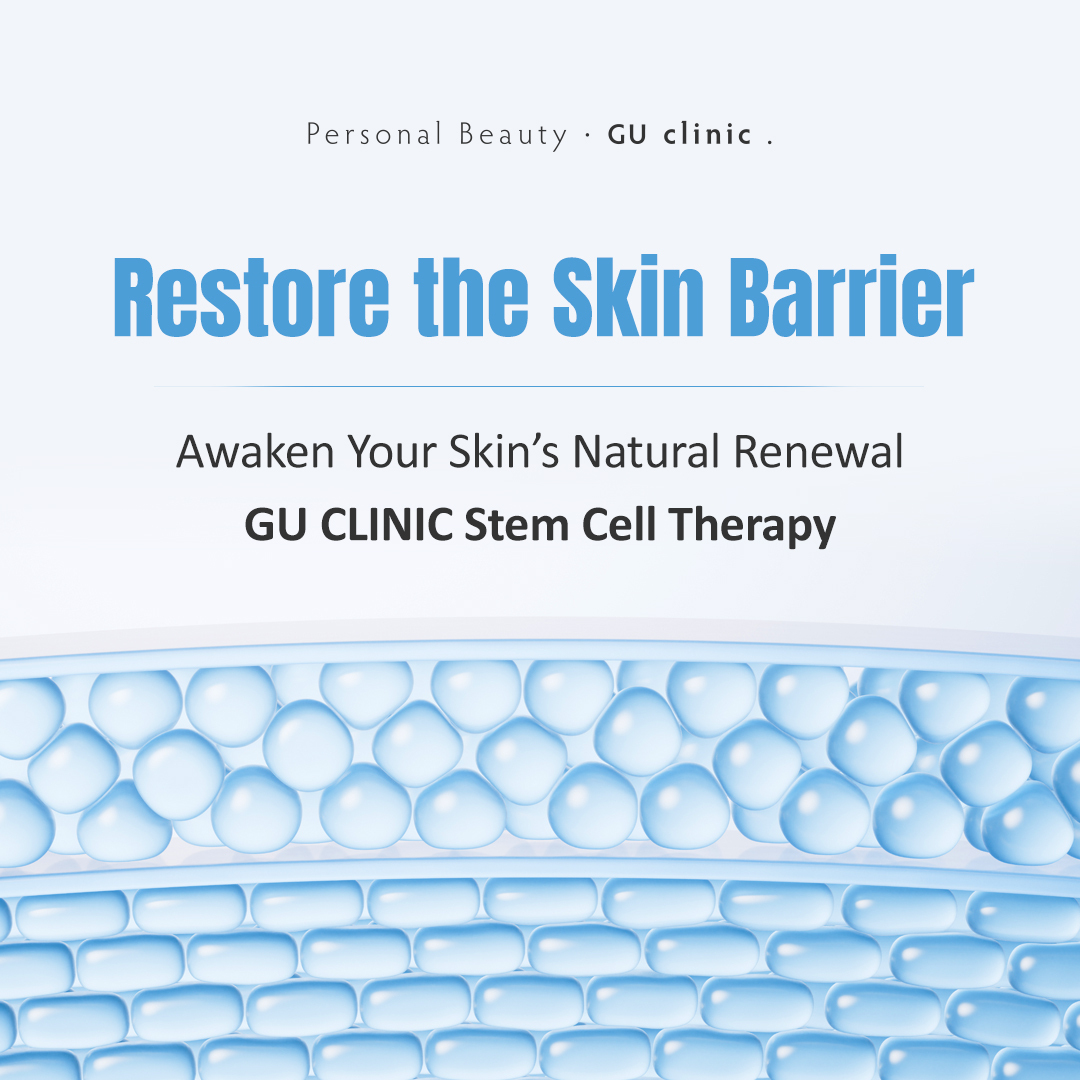
Personal Beauty · GU clinic .
Restore the Skin Barrier
Awaken Your Skin’s Natural Renewal
GU CLINIC Stem Cell Therapy
"When Your Skin Feels Unusually
Dry, Red, and Sensitive"
Hello, this is GU CLINIC.
The skin barrier forms the outermost protective layer of the skin.
It helps prevent excessive moisture loss
while shielding the skin from external irritants.
When the skin is healthy, it can gradually regain its balance
through its natural recovery process following temporary irritation.
The concern begins when dryness, redness, and stinging repeatedly return
—and the skin takes longer to settle each time.
UV exposure, sudden temperature changes, excessive cleansing,
and frequent exfoliation can all weaken the skin barrier.
When supporting skin barrier recovery, moisturizing is only one part of the process.
It is equally important to identify what continues to irritate the skin.
Personal Beauty · GU clinic
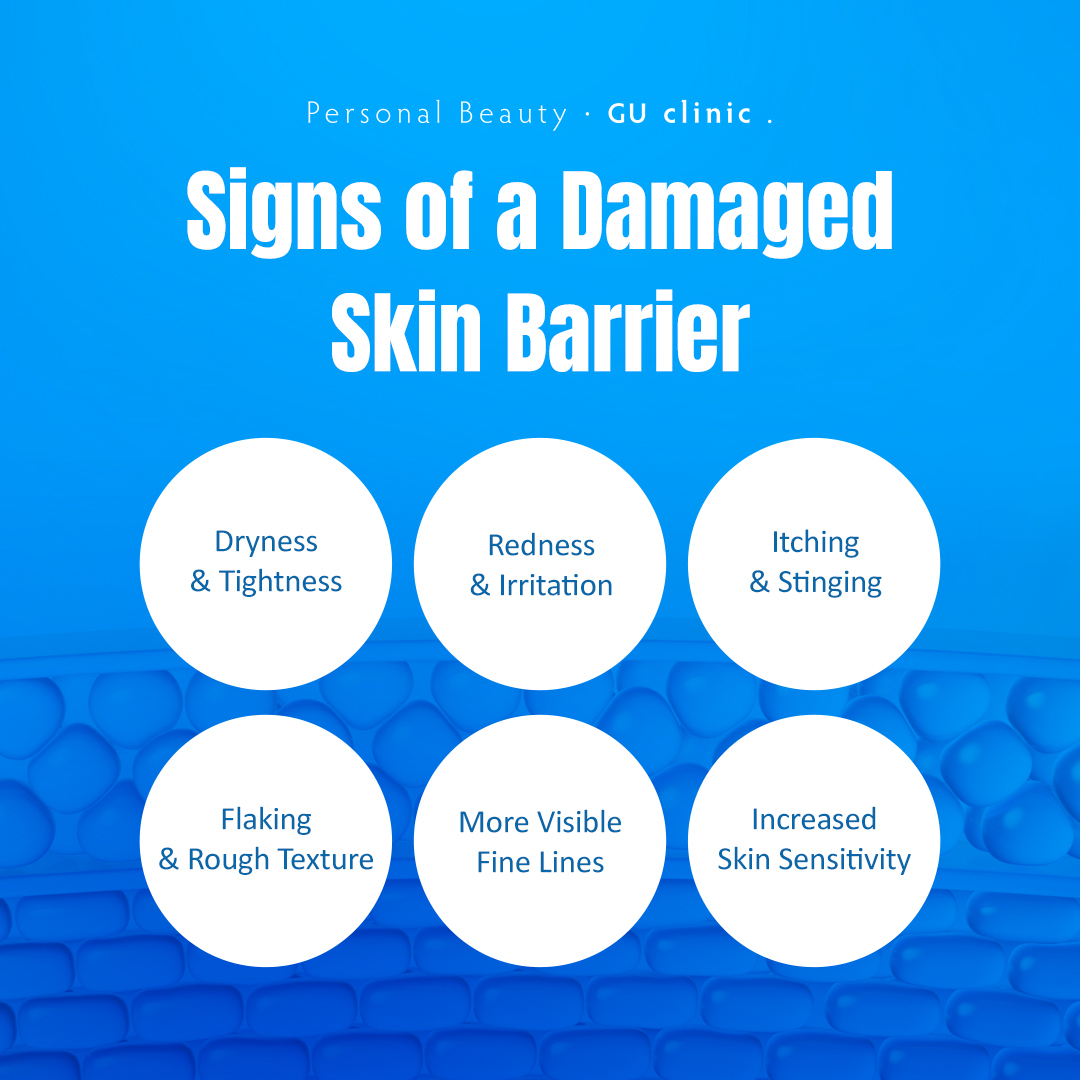
Signs of a Damaged Skin Barrier
Signs
- Dryness & Tightness
- Redness & Irritation
- Itching & Stinging
- Flaking & Rough Texture
- More Visible Fine Lines
- Increased Skin Sensitivity
"Skin Barrier Recovery Begins
with the Right Environment"
The skin barrier is not a fixed wall.
Cells within the stratum corneum and the lipids between
them work together to maintain balance,
while older cells are continually shed and replaced by new ones.
When the skin is damaged, multiple types of cells exchange signals,
regulate inflammatory responses, and help organize the recovery of affected tissue.
However, biological aging and repeated exposure to external stressors
may gradually affect the speed and efficiency of these processes.
This may help explain why redness that once settled quickly begins to linger,
or why dryness and sensitivity return soon after moisturizer is applied.
Supporting the skin barrier starts with replenishing moisture
and lipids while reducing unnecessary irritation.
If dermatitis, allergies, or infection are suspected,
appropriate medical assessment and treatment should come first.
Dryness may look similar from one person to another,
but the condition of the skin and the cause of the damage can differ.
Identifying the underlying issue is therefore an essential first step.
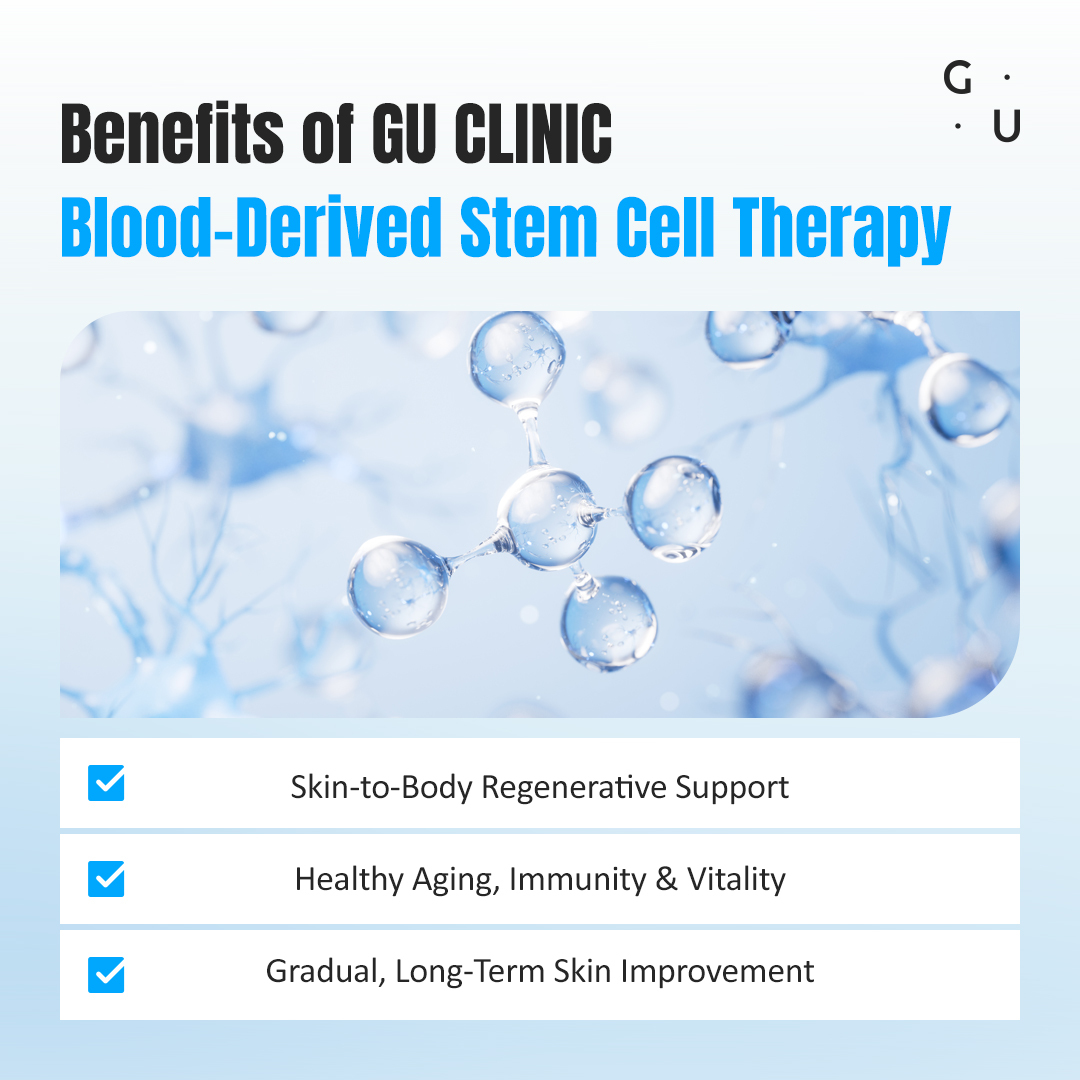
Benefits of GU CLINIC Blood-Derived Stem Cell Therapy
Benefits
- Skin-to-Body Regenerative Support
- Healthy Aging, Immunity & Vitality
- Gradual, Long-Term Skin Improvement
"How Are Blood-Derived Stem Cells
Related to the Skin Barrier?"
Hematopoietic stem cells are capable of developing into various cells
that make up the blood and immune systems.
They do not directly become the cells that form the skin.
However, because the blood and immune systems are involved in inflammatory responses
and tissue recovery, hematopoietic stem cells remain an area of interest in regenerative medicine research.
It is important to understand that blood-derived stem cell treatment in Gangnam,
Seoul does not instantly repair a damaged skin barrier or immediately eliminate dryness.
Its suitability should be considered only after evaluating
the current condition of the skin, the patient’s overall health,
and the intended purpose of treatment.
"Look Beyond the Skin’s Surface"
When skin barrier damage is temporary, reducing irritation
and maintaining consistent moisturization may be enough to
help the skin regain its balance.
If dryness and sensitivity continue despite regular care,
however, it may be necessary to look at skincare products,
cleansing habits, sleep, stress, nutrition, and other factors that affect overall health.
Not every change in the skin should be attributed to aging or reduced regenerative capacity.
Persistent itching, oozing, pain, or severe redness may indicate
an underlying skin condition that requires medical evaluation.
At GU CLINIC,
we assess the condition of the skin barrier alongside lifestyle habits
and overall health before determining an appropriate direction for care.
Maintaining healthy skin over time requires
more than temporarily concealing visible dryness.
The factors behind recurring changes should also be carefully identified.
If you are considering blood-derived stem cell treatment in Gangnam, Seoul,
a thorough consultation can help determine which approach,
if any, is appropriate for your skin and overall health.
Thank you for reading.
Come as you are
"GU CLINIC Gangnam Main Branch"
* Ministry of Health and Welfare-designated
Advanced Regenerative Medicine Institution
(Designation No. Regeneration-1-0036)
* 3F–4F, W Tower, 54 Seocho-daero 77-gil, Seocho-gu, Seoul
* In front of Exit 7 at Sinnonhyeon Station / Near Gangnam Station
* Main number: +82-2-6241-0096
* Weekdays: 10:30 AM–9:00 PM
* Saturdays, Sundays, and public holidays: 10:30 AM–7:00 PM
(Closed on Lunar New Year’s Day and Chuseok Day)
* Medical team of 25 physicians
(Including board-certified specialists in plastic surgery,
dermatology, and family medicine)
* Consultation languages
Korean · English · Simplified Chinese · Traditional Chinese · Japanese
* Stem cell programs available
Adipose-derived stem cells · Blood-derived stem cells
Bone marrow-derived stem cells · HSC PRS Blood Stem Cell Therapy
* Ilsan Branch also available
Stem cell care is overseen by Dr. Yoonchae Na, Director of the Stem Cell Center.
* Board-certified Family Medicine Specialist
* M.D., Yonsei University College of Medicine
* Adjunct Professor, Graduate School of Integrative Medicine, CHA University
* Board Member, Korean Society of Liposuction
* Vice Chair, Korean Society for Stem Cell Research (KSSCR)
* Former Professor, Health Life Center, Chaum
* Former Director, Integrated Immune and Stem Cell Center, Chaum, CHA Biotech
* Former Deputy Head, Global Bio Business Division, Seegene Inc.
* Former Medical Director, 365mc