
How Sofwave Works in the Dermis to Improve Skin Firmness
Explore how Sofwave targets the dermis to support skin firmness, how it differs from Ultherapy PRIME and ULTLINE, and what to consider before treatment in Seoul.
SOFWAVE SEOUL
How Sofwave Works in the Dermis to Improve Skin Firmness
A Guide to Sofwave in Seoul:
Understanding Dermal Skin Tightening
Changes in skin firmness involve more than the surface.
The dermis—the layer beneath the epidermis—plays a role in how firm and resilient skin feels.
Sofwave is an ultrasound-based treatment designed to target this layer.
At GU Clinic, people asking about Sofwave often have similar questions:
How is it different from Ultherapy PRIME? Could it affect the fat in my face?
This guide explains how Sofwave delivers energy to
the dermis and what to consider when deciding whether it suits your concerns.
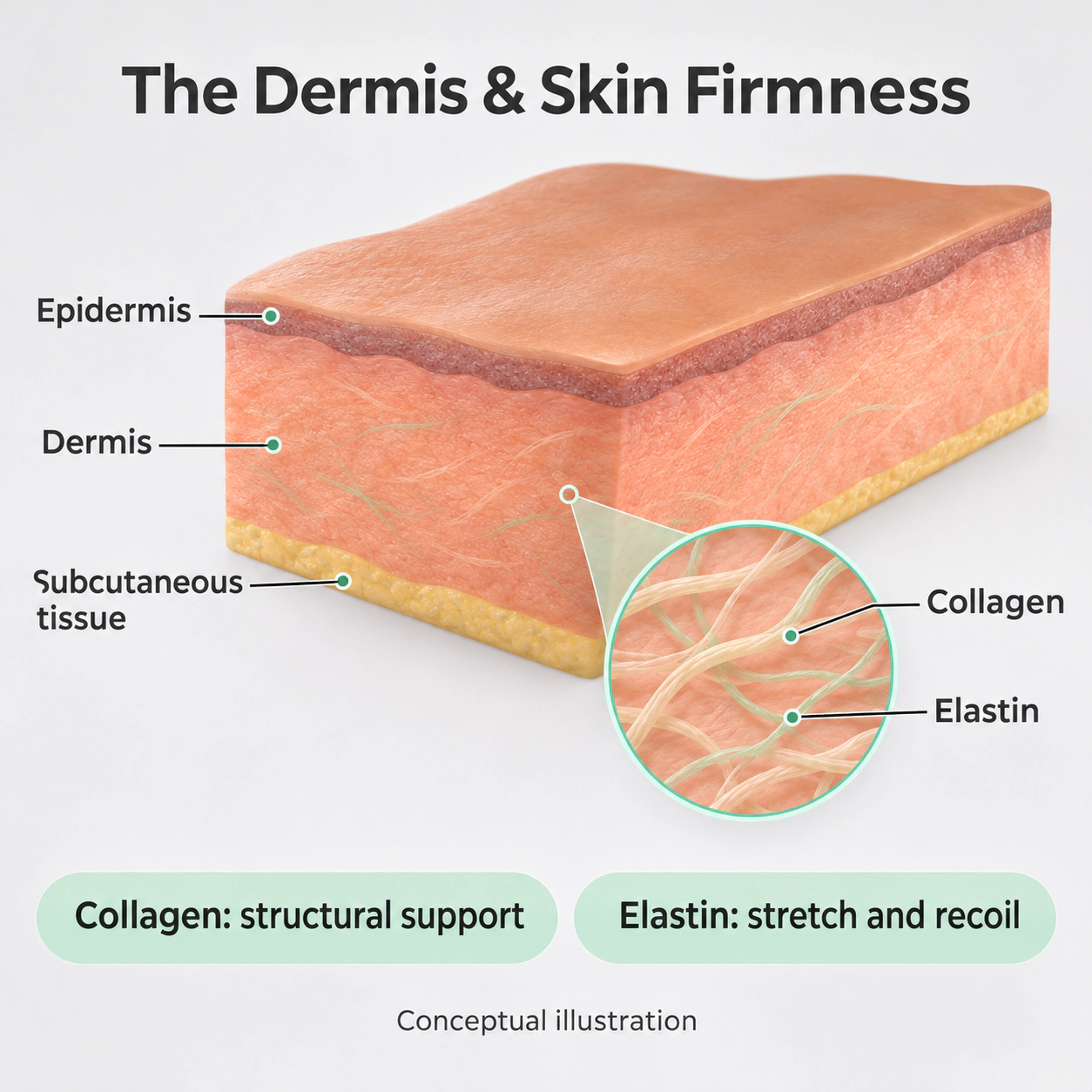
The Dermis & Skin Firmness
Skin Layers
- Epidermis
- Dermis
- Subcutaneous tissue
Dermal Components
- Collagen
- Elastin
- Collagen
- structural support
- Elastin
- stretch and recoil
Conceptual illustration
What Is the Dermis, and How Does It Support Skin Firmness?
The skin and underlying tissue are commonly described in three layers:
the outer epidermis, the dermis beneath it, and the deeper subcutaneous tissue, which contains fat.
The dermis contains a network of collagen and elastin fibers.
Collagen provides structural support, while elastin helps skin return to its shape after stretching.
With aging, changes in these fibers can contribute to
reduced resilience, fine lines, and a less firm appearance.
However, facial sagging can also involve deeper tissues, fat distribution,
and other structural changes. Dermal treatment addresses one part of this broader picture.
What Is Sofwave?
Sofwave uses SUPERB™—Synchronous Ultrasound Parallel Beam—technology.
Multiple ultrasound beams deliver thermal energy to the mid-dermis.
The system has received US FDA clearance for improving facial lines and
wrinkles, lifting the eyebrows, and lifting lax tissue beneath the chin and
on the neck in adults aged 22 and older.
At GU Clinic, Sofwave may be discussed when the treatment goal is to
improve dermal firmness rather than reduce facial fat.
Suitability still requires an assessment of tissue thickness, facial anatomy, and previous treatments.
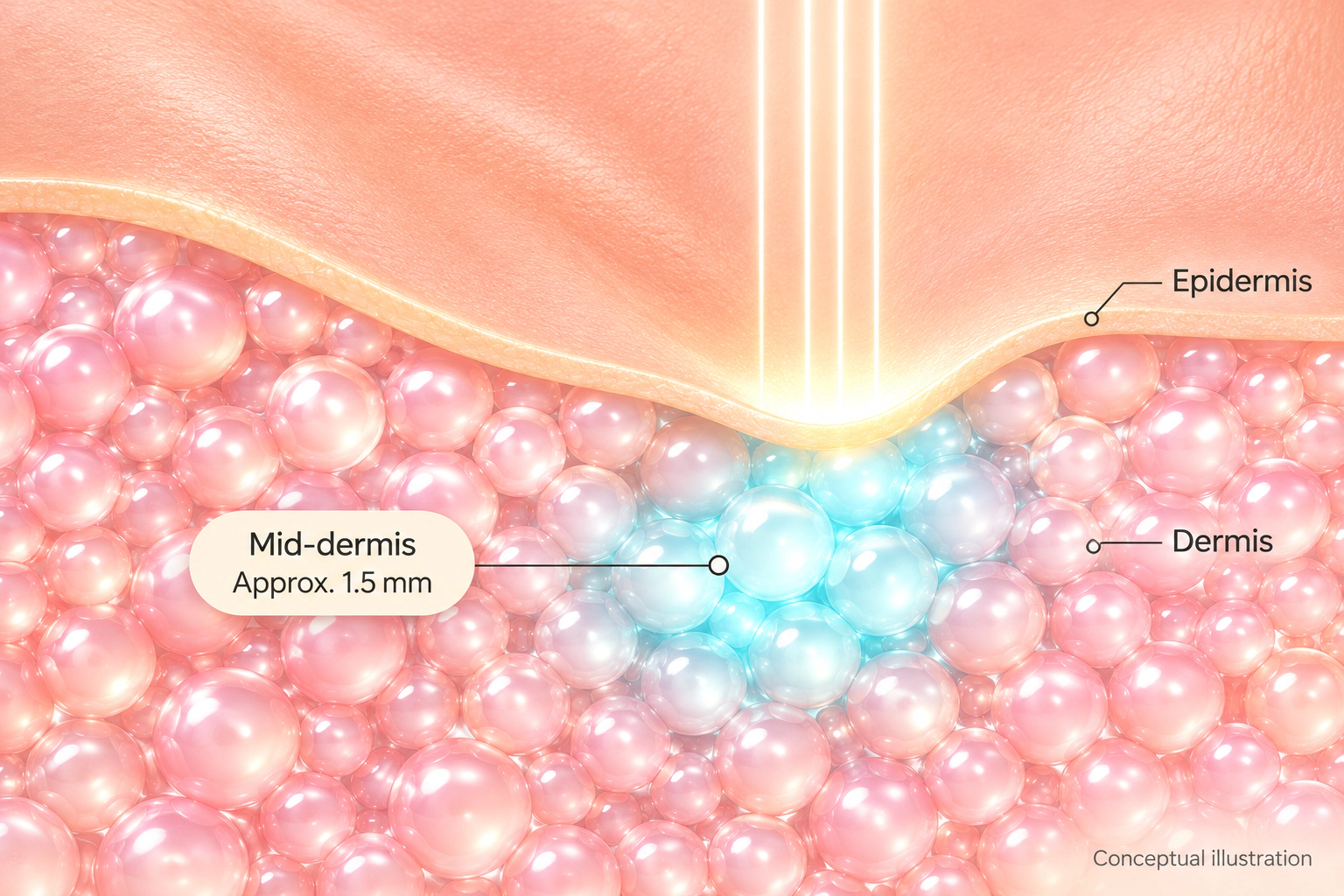
Skin Layer Conceptual Illustration
- Epidermis
- Outer layer of the skin
- Dermis
- Inner layer of the skin containing collagen and elastin structures
- Mid-dermis
- Approx. 1.5 mm
Conceptual illustration
How Sofwave Works in the Dermis
1. It Targets the Mid-Dermis at Approximately 1.5 mm
Sofwave is designed to deliver energy at approximately 1.5 mm
beneath the skin surface, targeting the mid-dermis.
Its intended target differs from treatments designed to act on deeper supporting tissues or reduce fat.
However, this should not be interpreted as a guarantee that unwanted contour changes cannot occur.
People with thin tissue or existing facial hollowing should discuss these concerns before treatment.
2. Parallel Beams Create Multiple Treatment Zones
Multiple ultrasound beams operate in parallel to create thermal treatment zones within the dermis.
This arrangement differs from the focal treatment pattern used by other ultrasound systems. The resulting coverage depends on applicator placement, treatment settings, and the areas selected by the clinician.
3. Integrated Cooling Helps Protect the Skin Surface
Sofwave incorporates Sofcool™ cooling to help protect the epidermis while
delivering thermal energy to the dermis.
The manufacturer describes target-tissue heating of approximately 60–70°C as part of its treatment mechanism. This refers to the intended temperature within the target tissue, rather than the skin surface.
Cooling does not eliminate the possibility of discomfort or adverse reactions.
4. Tissue Remodeling Develops Gradually
Controlled thermal stimulation is intended to trigger a tissue-remodeling response,
including new collagen formation.
Visible changes may develop over the following weeks and months.
Immediate tightness alone does not establish the final result,
and the timing and degree of improvement vary between individuals.
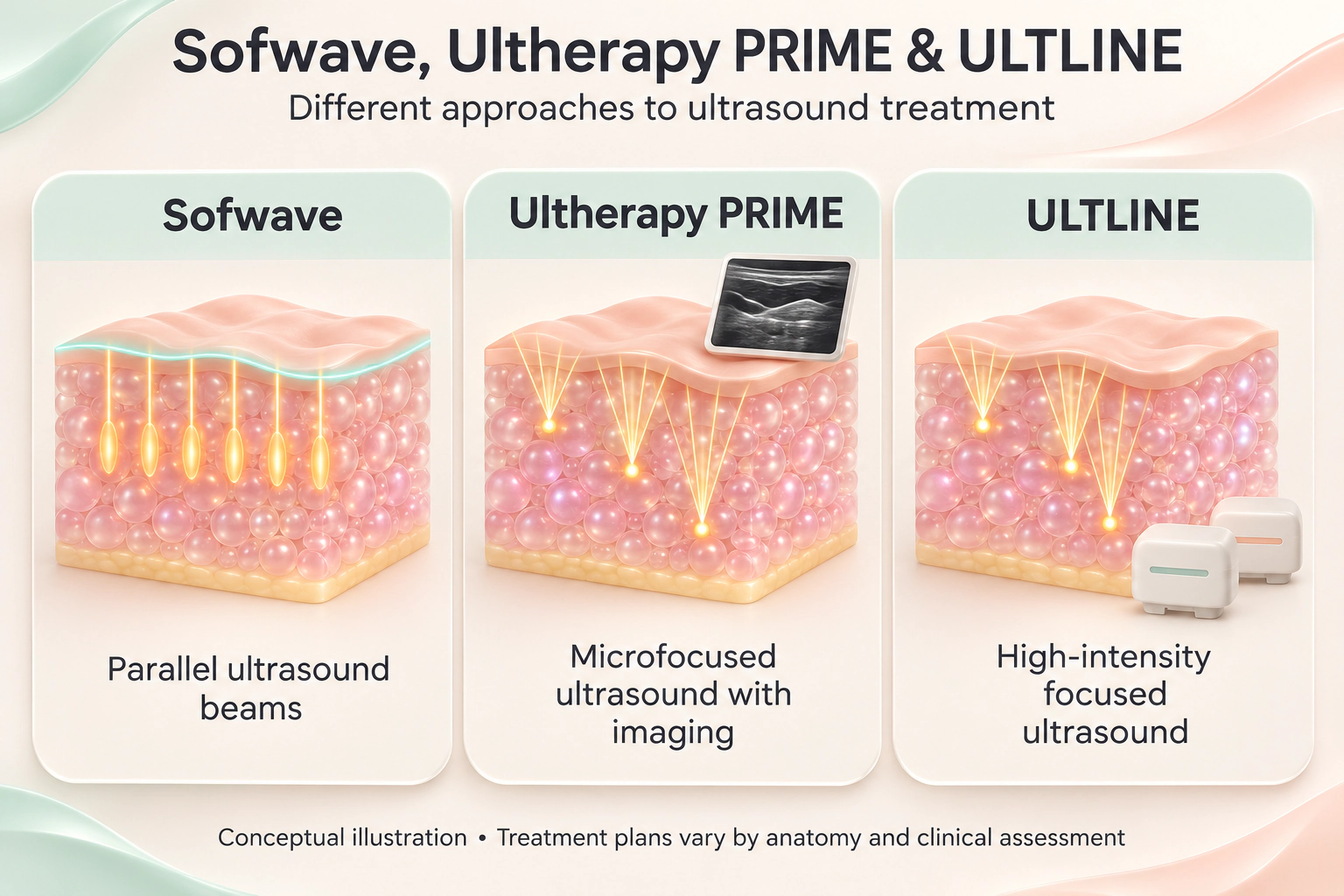
Sofwave, Ultherapy PRIME & ULTLINE
Different approaches to ultrasound treatment
| Treatment Name | Technology Description |
|---|---|
| Sofwave | Parallel ultrasound beams |
| Ultherapy PRIME | Microfocused ultrasound with imaging |
| ULTLINE | High-intensity focused ultrasound |
Conceptual illustration • Treatment plans vary by anatomy and clinical assessment
How Does Sofwave Differ From
Ultherapy PRIME and ULTLINE?
All three systems use ultrasound, but their delivery methods,
imaging features, and available treatment configurations differ.
Feature | Sofwave | Ultherapy PRIME | ULTLINE |
|---|---|---|---|
Technology | SUPERB™ parallel ultrasound beams | Microfocused ultrasound with real-time visualization using DeepSEE® | High-intensity focused ultrasound, or HIFU |
Depth considerations | Designed to target the mid-dermis at approximately 1.5 mm | Commonly uses nominal depths of 1.5, 3.0, and 4.5 mm; the actual tissue layer depends on local anatomy | Depth options depend on the facial cartridges and body handpieces used |
Features relevant to planning | Dermal energy delivery with integrated surface cooling | Tissue assessment on real-time imaging, transducer selection, and line distribution | Handpiece and cartridge selection, with adjustable delivery settings |
Concerns discussed during consultation | Facial lines, wrinkles, and skin laxity | Laxity assessed across suitable treatment depths and areas | Facial laxity and contour concerns, with separate configurations for body treatment |
These differences do not establish that one device is best for every concern.
A clinician should assess whether the main issue involves dermal changes,
deeper tissue laxity, fat distribution, or a combination of factors.
A nominal depth should not automatically be equated with the same anatomical layer in every person.
Combination treatment may be considered in selected cases, but it is not automatically necessary.
If more than one device is proposed, ask about the purpose, treatment area, and timing of each.
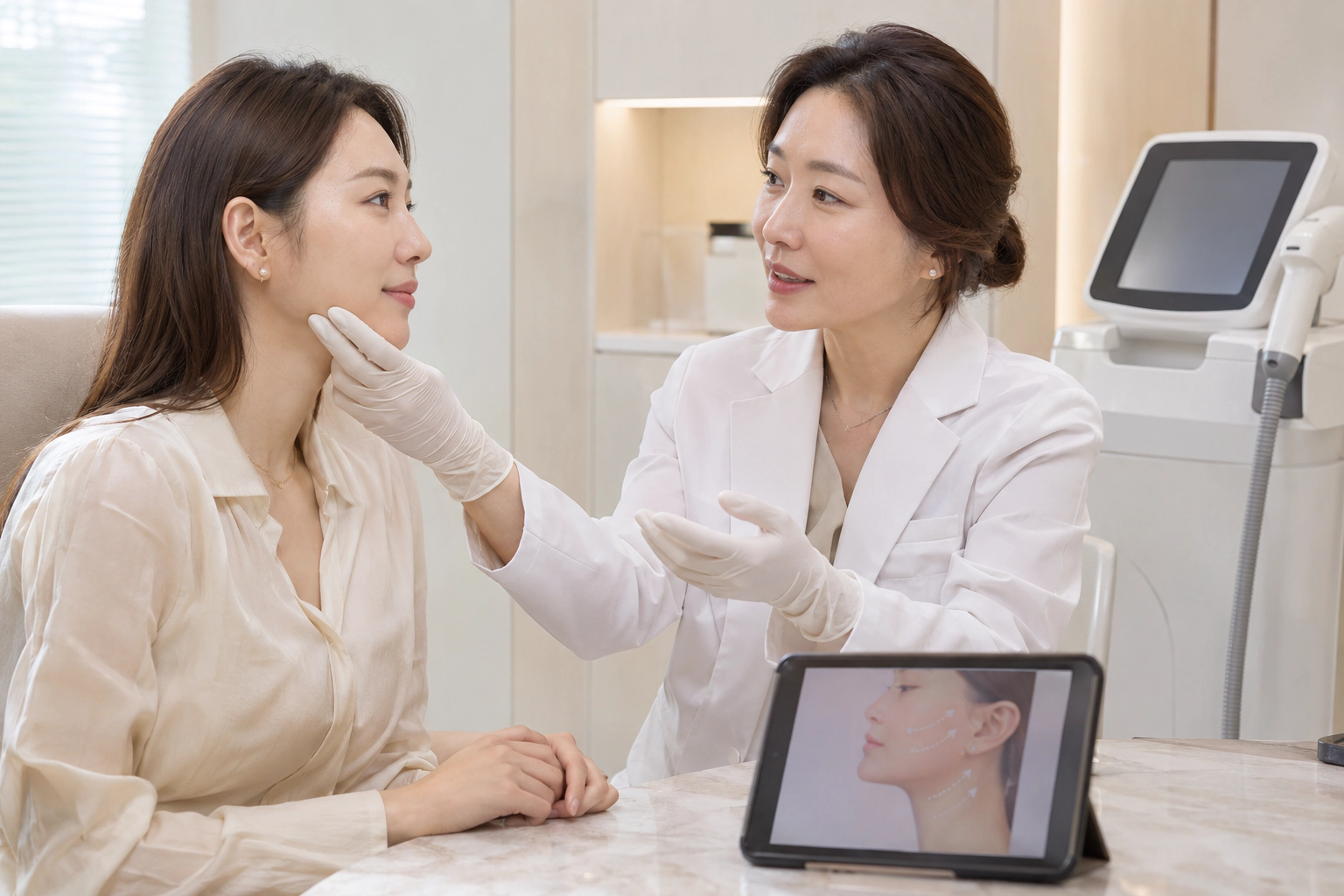
When Might Sofwave Be Discussed?
Sofwave may be considered during consultation for people who:
Have noticed facial fine lines or reduced skin firmness.
Want a non-surgical option and understand its potential benefits and limitations.
Are concerned about facial hollowing and want to discuss a treatment focused on the dermis.
Are interested in treatment for brow, submental, or neck laxity following assessment.
Are planning treatment during a visit to Korea and need to understand recovery and follow-up arrangements.
Thin skin alone does not establish suitability.
Treatment around the brow also should not be understood as
permission to treat the eyelids or every area around the eyes.
Downtime and Aftercare
Many people can resume everyday activities after Sofwave, but recovery varies.
Redness, swelling, pain, or tenderness may occur.
The manufacturer also lists potential adverse events such as persistent redness or swelling,
pigment changes, bruising, and skin erosion or ulceration.
After treatment:
Use sun protection consistently.
Maintain gentle moisturizing care.
Avoid rubbing or massaging the treated area unless instructed.
Follow your clinic’s guidance on resuming sauna use, hot baths, strenuous exercise, and alcohol.
The duration of these precautions should reflect your skin response and
the treating clinician’s instructions, rather than a fixed schedule for everyone.
Contact your clinic promptly if you develop severe or worsening pain,
blisters, skin breakdown, or persistent changes in sensation.
If you are visiting Korea, confirm how follow-up will be arranged and how to
contact the clinic after returning home.

Self check-in
Frequently Asked Questions About Sofwave
Q. Is Sofwave suitable for my skin concerns?Suitability depends on your skin condition, the location and degree of laxity, and your treatment goals. During your consultation at GU Clinic, explain which changes you would like to see and which facial contours you want to preserve. Q. How do I choose between Sofwave, Ultherapy PRIME, and ULTLINE?The choice begins with an assessment of your skin and underlying facial structure. Ask your clinician which approach suits your concerns, why it is recommended, and what limitations to expect. Q. What should I share during my consultation?Tell your clinician about previous lifting treatments, fillers, relevant medical history, and any medications you take. Sharing your travel schedule and available recovery time also helps with treatment planning. Q. Can international patients arrange a consultation at GU Clinic?GU Clinic provides consultations for international patients. Before your visit, contact the clinic to confirm language support and appointment availability, and discuss how follow-up care can be arranged after you return home. |
This article provides general information and does not replace individual diagnosis or treatment advice. Results, recovery, and adverse reactions vary between individuals. Consult a qualified medical professional before treatment.

GU Clinic Gangnam Information
Designated by the Ministry of Health and Welfare
as an Advanced Regenerative Medicine Institution
(Designation No. Regeneration-1-0036)
54 Seocho-daero 77-gil, Seocho-gu, Seoul
W Tower, 3rd and 4th Floors
* Near Sinnonhyeon Station Exit 7 and Gangnam Station
* Main line: +82-2-6241-0096
* Weekdays: 10:30 AM–9:00 PM
* Saturdays, Sundays, and public holidays: 10:30 AM–7:00 PM
(Closed on Lunar New Year’s Day and Chuseok)
*25 physicians
(Including specialists in plastic surgery,
dermatology, and family medicine)
Consultations available in
Korean · English · Simplified Chinese · Traditional Chinese · Japanese
* GU Clinic also operates an Ilsan location
Care is led by Dr. Ki-beom Park, Chief Medical Director.
B.S. in Biotechnology, College of Engineering, Yonsei University
M.D., Yonsei University College of Medicine
* Adjunct Professor, Graduate School of Integrative Medicine, CHA University
* Co-founder of Gangnam Unni, a medical aesthetics information platform
* Founder and CEO of Healing Breeze, a medical service organization (MSO)
* Developer of GENABELLE, a K-derma cosmetics brand
* Developer of CELLORA of GU