Non-Surgical Facelift in Seoul: Ultherapy Prime vs Shurink vs XERF
Compare Ultherapy Prime, Shurink Universe and XERF for non-surgical skin tightening in Seoul. Understand ultrasound vs radiofrequency, treatment planning and what to discuss about jawline laxity.
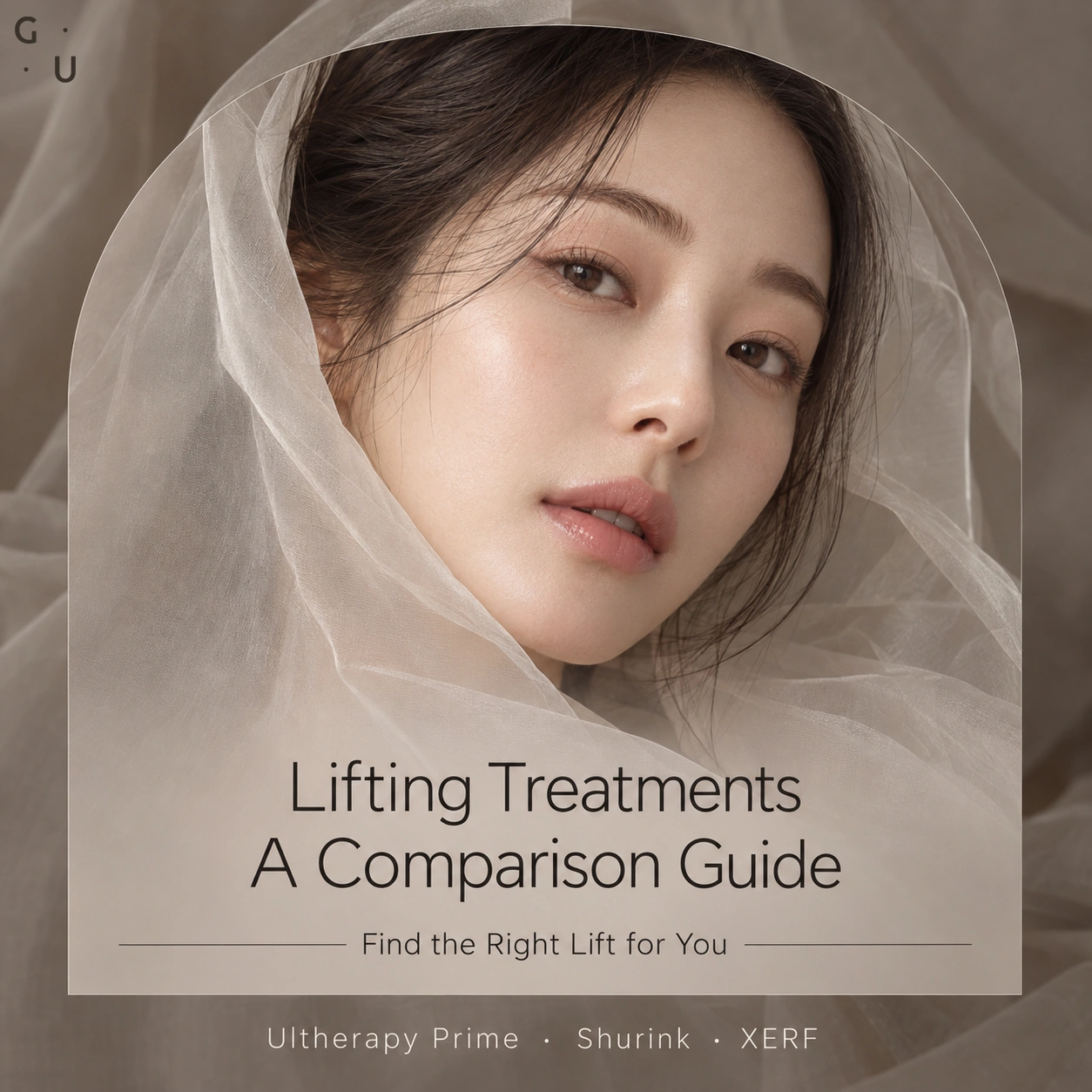
"My jawline looks less defined.
Which lifting treatment should I consider?"
You may notice that the area beneath your chin looks fuller in photos,
or that your cheeks and the corners of your mouth appear to sag when you look down.
Searching for a non-surgical facelift in Seoul brings up options such as
Ultherapy Prime, Shurink and XERF. Different prices and shot counts can make the choice confusing.
The starting point is where laxity appears,
how facial fat is distributed and what you would like to change.
Ultherapy Prime and Shurink use ultrasound, while XERF uses radiofrequency. Because they deliver energy differently, comparing prices or shot counts alone does not explain which treatment may suit you.
These treatments are commonly described as non-surgical lifting or skin tightening.
Their results and scope differ from those of a surgical facelift.
If you are considering skin tightening in Gangnam,
ask how each option relates to your facial structure and treatment goals.
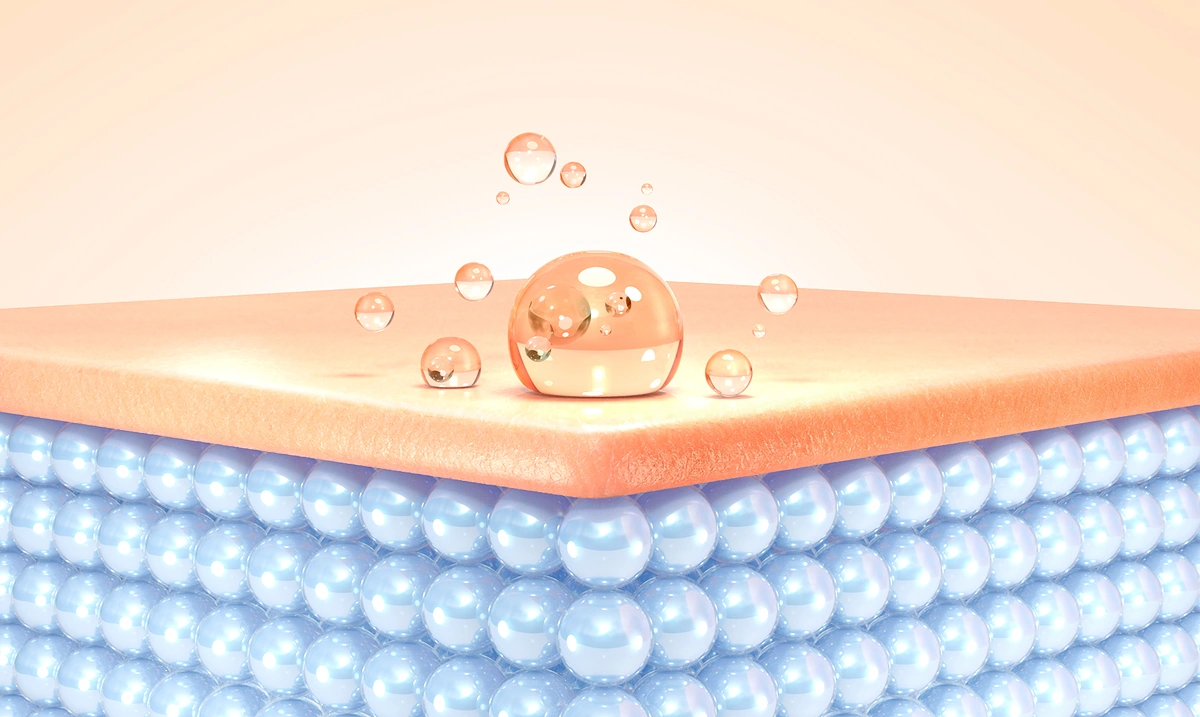
"HIFU vs RF skin tightening:
What is the difference?"
✅ Ultherapy Prime: Ultrasound lifting with real-time imaging
Ultherapy Prime uses microfocused ultrasound and
provides real-time ultrasound images of the tissue being treated.
These images help the clinician assess tissue depth and
contact while planning where to deliver energy.
The imaging function supports treatment planning,
but it does not guarantee the same outcome for every patient.
✅ Shurink Universe: Focused ultrasound with different cartridges and modes
Shurink uses focused ultrasound to deliver energy at selected tissue depths,
with the aim of stimulating collagen remodeling and tissue contraction.
The treatment plan varies with the device model, cartridges and modes used.
When comparing Ultherapy vs Shurink,
discuss these features alongside the treatment area and intended change.
✅ XERF: Radiofrequency-based skin tightening
XERF is a monopolar radiofrequency system that
combines two frequencies: 6.78 MHz and 2 MHz.
It delivers thermal energy to tissue for skin tightening.
Focused ultrasound concentrates energy at selected depths.
Radiofrequency generates heat through the tissue’s resistance to electrical current.
The main differences are summarized below.
Ultherapy Prime | Shurink Universe | XERF | |
|---|---|---|---|
Energy type | Microfocused ultrasound | Focused ultrasound | Monopolar radiofrequency |
Key feature | Real-time ultrasound imaging | Cartridge- and mode-based treatment options | Dual-frequency thermal energy delivery |
What to discuss | Tissue assessment and treatment plan | Device model, cartridges and treatment areas | Applicator, energy settings, heat sensation and cooling |
When comparing non-surgical lifting treatments in Seoul,
the goal is to match the energy delivery method to the treatment area and tissue characteristics.


"What should I compare
besides shot counts and price?"
Shot counts are often highlighted in skin tightening packages.
However, the energy delivery and treatment coverage of each shot differ between devices.
300 shots of Ultherapy Prime, 300 shots of Shurink and
300 shots of XERF should not be treated as equivalent doses.
Even with the same device, the plan can vary depending on
how energy is distributed across the jawline, cheeks and the area around the mouth.
During your consultation, ask which areas will be treated and
what each part of the plan is intended to address.
It is also helpful to discuss expected discomfort, possible reactions and your schedule.
Redness, swelling or tenderness may occur, and recovery varies between individuals.

"Three things to check before
choosing a lifting treatment"
1. Is the concern skin laxity, volume loss or fat distribution?
A less defined jawline may involve more than one factor.
An assessment can help distinguish tissue descent from fullness or hollowing.
2. Have you been told why this treatment was selected?
Discuss the treatment areas, expected changes and limitations,
including concerns the procedure may not address.
3. Have previous treatments and recovery plans been considered?
Share your history of fillers, thread lifts and other aesthetic procedures.
Confirm aftercare instructions and when follow-up will be needed.
At GU Clinic, consultations consider your current facial condition and
desired changes when planning a suitable lifting approach.
Results and recovery vary. Potential risks depend on the procedure and
may include redness, swelling, tenderness, burns or nerve-related symptoms.
Discuss suitability and risks with your clinician before treatment.
"GU Clinic Gangnam Information"
Designated by the Ministry of Health and Welfare
as an Advanced Regenerative Medicine Institution
(Designation No. Regeneration-1-0036)
54 Seocho-daero 77-gil, Seocho-gu, Seoul
W Tower, 3rd and 4th Floors
* Near Sinnonhyeon Station Exit 7 and Gangnam Station
* Main line: +82-2-6241-0096
* Weekdays: 10:30 AM–9:00 PM
* Saturdays, Sundays, and public holidays: 10:30 AM–7:00 PM
(Closed on Lunar New Year’s Day and Chuseok)
*25 physicians
(Including specialists in plastic surgery,
dermatology, and family medicine)
Consultations available in
Korean · English · Simplified Chinese · Traditional Chinese · Japanese
* GU Clinic also operates an Ilsan location
Care is led by Dr. Ki-beom Park, Chief Medical Director.
B.S. in Biotechnology, College of Engineering, Yonsei University
M.D., Yonsei University College of Medicine
* Adjunct Professor, Graduate School of Integrative Medicine, CHA University
* Co-founder of Gangnam Unni, a medical aesthetics information platform
* Founder and CEO of Healing Breeze, a medical service organization (MSO)
* Developer of GENABELLE, a K-derma cosmetics brand
* Developer of CELLORA of GU