
G.U
For naturally firm and youthful skin
GU Clinic's Anti-Aging Treatment
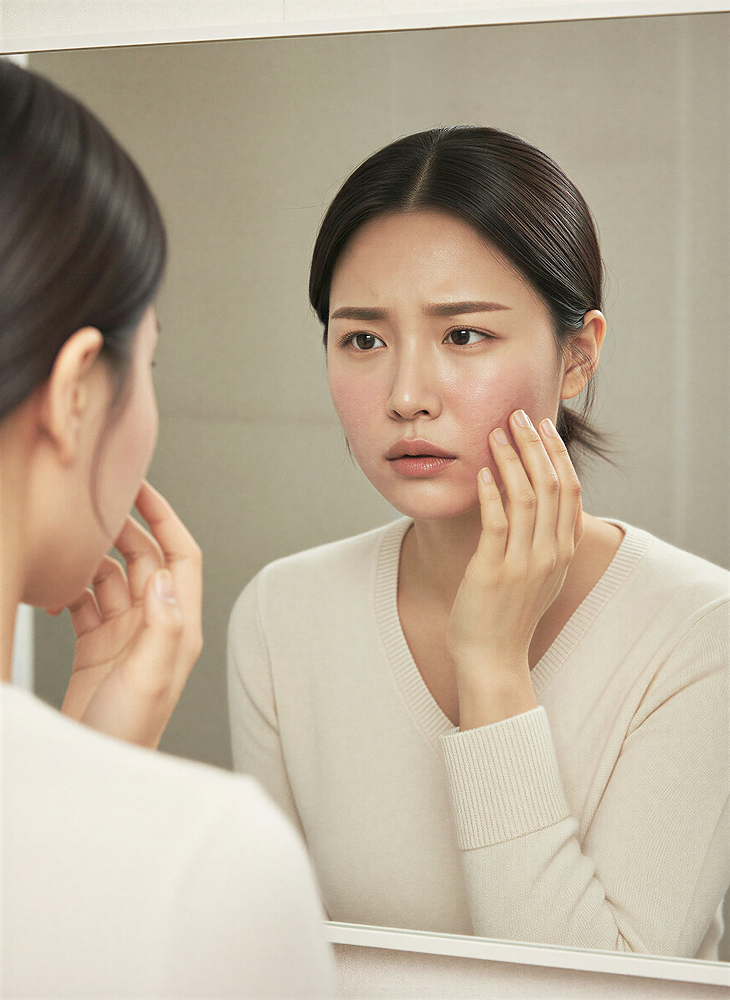
When Reflection Changes, It's Time for Care
Restore Skin Firmness with Facial Rejuvenation
G.U
For naturally firm and youthful skin
GU Clinic's Anti-Aging Treatment
Hello,
I'm Dr. Kibum Park,
Medical Director of GU Clinic.
Have you ever met someone your age and wondered,
'Why does their skin look
firmer and healthier than mine?'
Many people assume skin aging is determined by genetics.
However, research suggests that lifestyle, environmental factors,
and your body's internal condition play
a much greater role in how your skin ages.
Even among people of the same age,
the rate at which skin loses firmness can vary significantly.
Today, we'll explore:
(1) Why skin begins to lose firmness.
(2) When facial rejuvenation treatments should be considered.
(3) Which treatment options may be appropriate for different concerns?

"Skin Is Constantly Changing
—Even If You Can't See It"
Although your skin may look the same from day to day,
continuous repair and regeneration are taking place beneath the surface.
Skin cells constantly communicate with one another,
helping repair damaged tissue and maintain a healthy skin environment.
When this communication remains efficient,
the skin responds to damage more effectively
and retains its firmness for longer.
As we age, however,
these repair processes gradually slow down.
Visible signs such as sagging skin and wrinkles are simply the result of changes
that have been developing beneath the surface over many years.
"Why Does Skin Begin to Sag?"
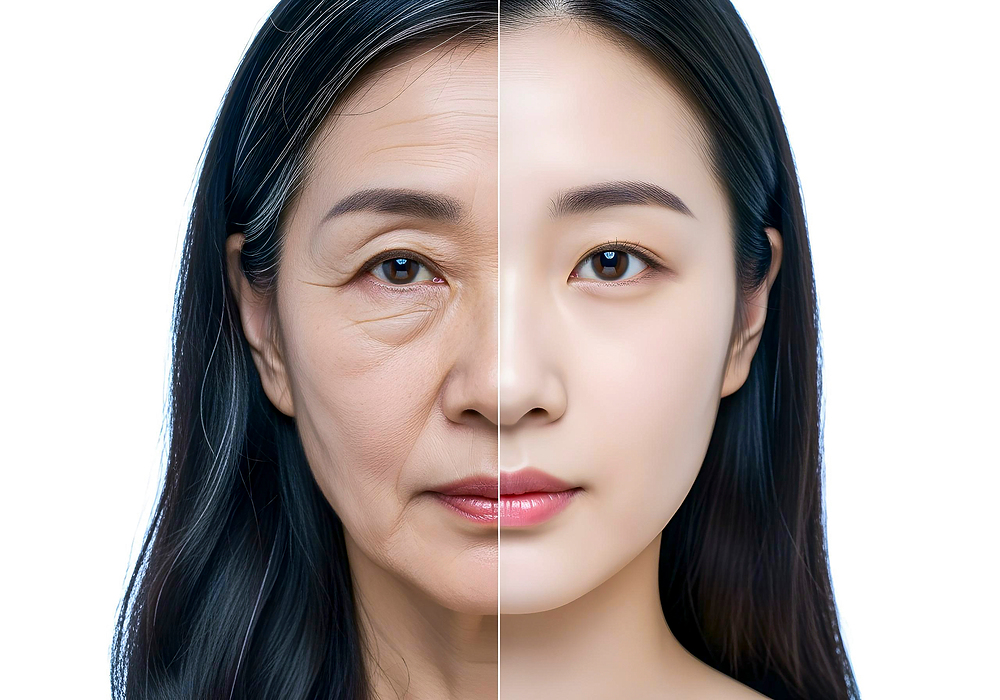
Skin laxity isn't caused by 'aging' alone.
Several structural changes occur simultaneously,
gradually affecting facial support.
Common Causes of Skin Sagging | ||
1) Loss of Collagen and Elastin
2) Downward Movement of Facial Fat.
3) Repetitive Facial Expressions.
4) Changes in Facial Bone Structure.
|
"When Is It Time
to Consider Facial Rejuvenation?"
Facial rejuvenation is often more effective
before significant sagging develops.
If you've started noticing subtle changes,
it may be the right time to seek professional evaluation.
You may benefit from treatment if:
📌 Your facial contour appears less defined in photos.
📌 Fine lines remain visible even when your face is relaxed.
📌 Others say you look more tired than before.
📌 Nasolabial folds or marionette lines are becoming more noticeable.
📌 Your reflection simply doesn't look the way it used to.
While these changes may develop gradually,
persistent signs often indicate
that the skin's support structure is changing.
The earlier treatment begins,
the more natural the outcome can be with less intervention.
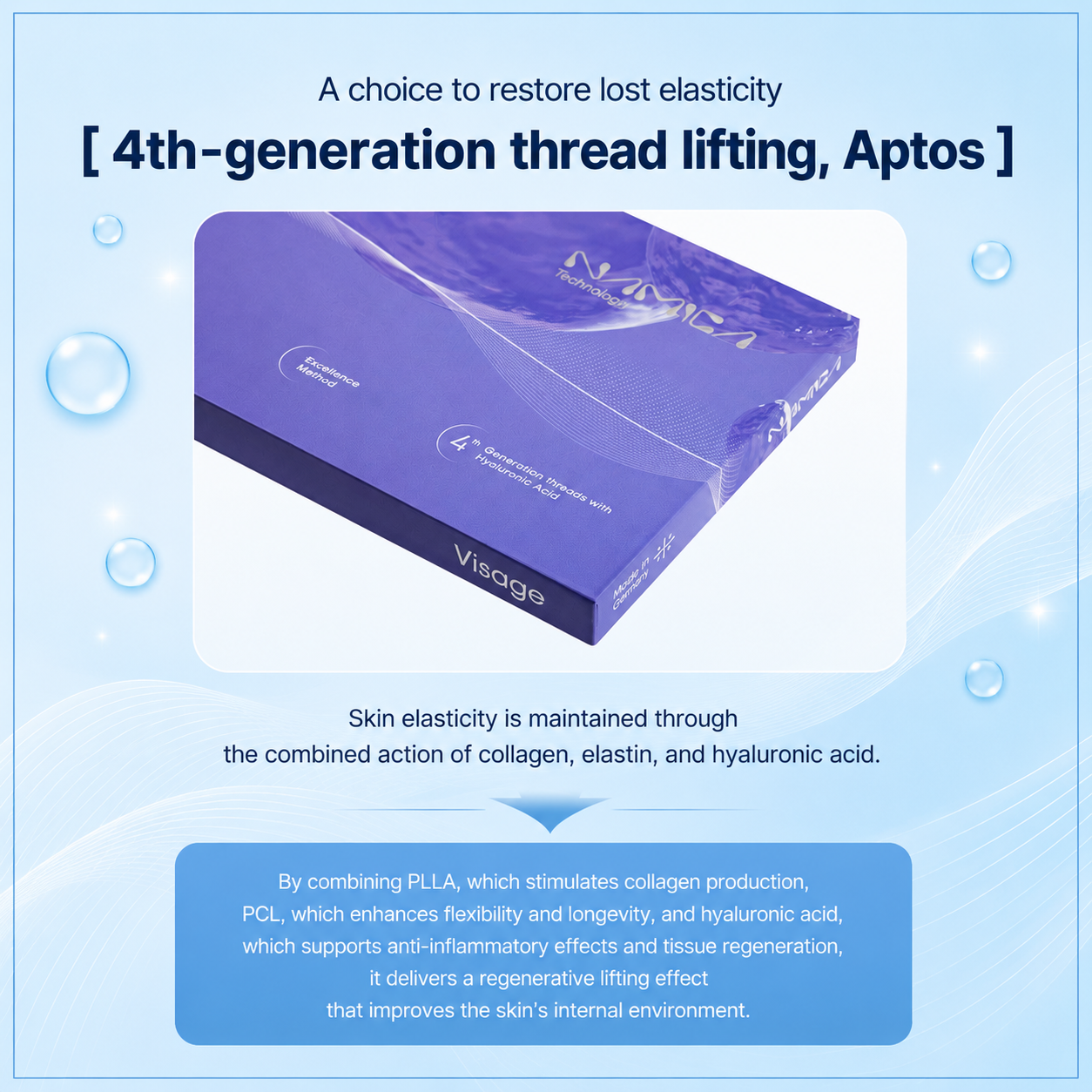
A choice to restore lost elasticity [ 4th-generation thread lifting, Aptos ]
Skin elasticity is maintained through the combined action of collagen, elastin, and hyaluronic acid.
By combining PLLA, which stimulates collagen production, PCL, which enhances flexibility and longevity, and hyaluronic acid, which supports anti-inflammatory effects and tissue regeneration, it delivers a regenerative lifting effect that improves the skin's internal environment.
"Aptos Thread Lift:
Restoring Facial Support"
One of the most effective options
for facial rejuvenation is the Aptos Thread Lift.
Rather than simply pulling the skin tighter,
Aptos works by repositioning descended facial tissues closer
to their natural position while encouraging collagen production over time.
This allows both immediate lifting
and gradual improvement in skin firmness.
PDO
(Provide immediate structural support
by mechanically lifting sagging tissue
through specially designed barbed threads.)
PLLA
(Stimulates collagen production as the threads are absorbed,
helping maintain long-term skin support.)
Hyaluronic Acid
(Helps improve hydration and contributes
to a smoother, fuller appearance.)
Together, these mechanisms help rebuild the skin's internal support structure
while improving overall facial firmness.
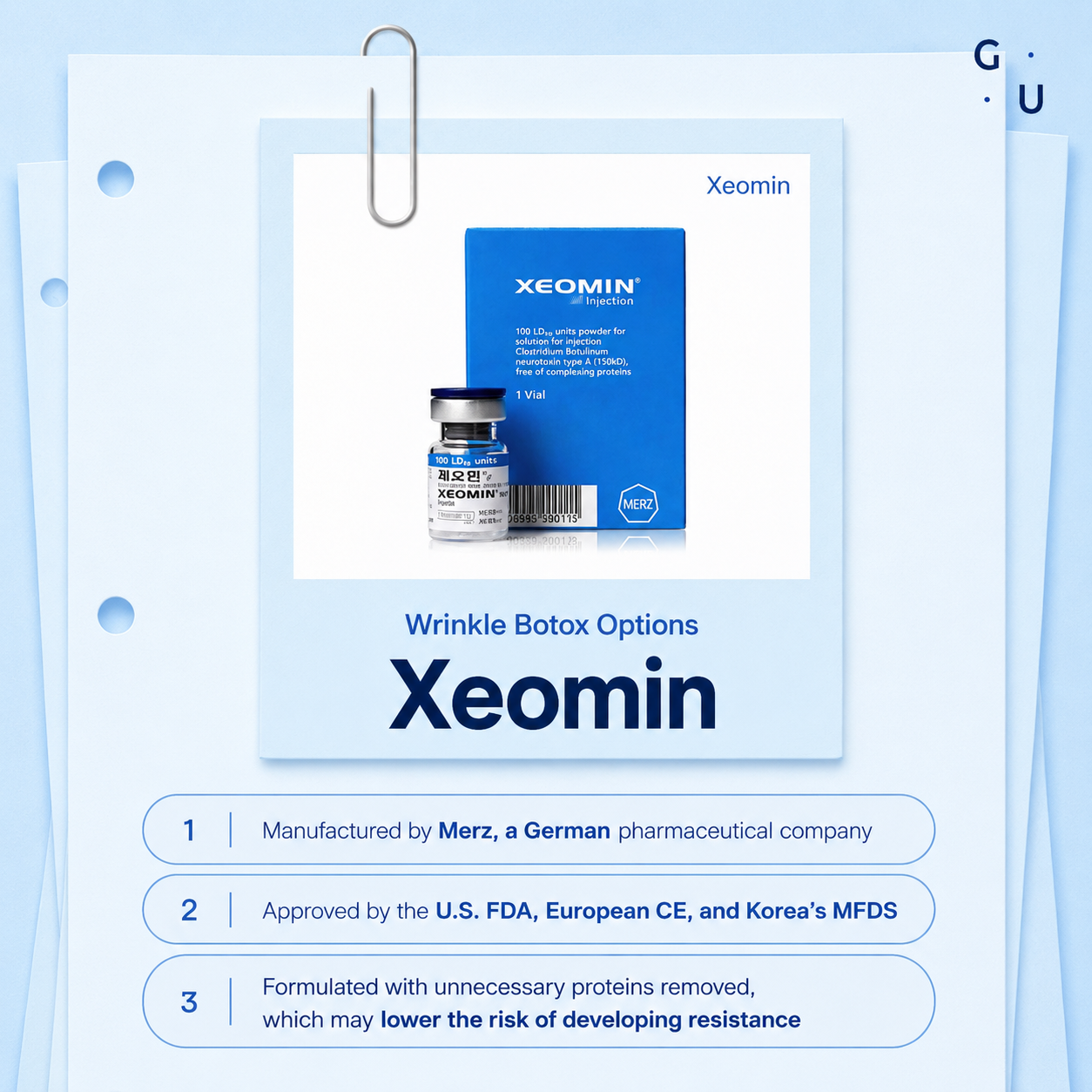
Wrinkle Botox Options
Xeomin
- Manufactured by Merz, a German pharmaceutical company
- Approved by the U.S. FDA, European CE, and Korea's MFDS
- Formulated with unnecessary proteins removed, which may lower the risk of developing resistance
"Xeomin: Preventing Wrinkles
Before They Deepen"
Xeomin is a botulinum toxin developed by Merz, Germany.
Unlike conventional formulations,
Xeomin contains highly purified botulinum toxin
without complexing proteins,
reducing the likelihood of antibody formation with repeated treatments.
This allows many patients
to maintain consistent treatment results over time.
Xeomin is commonly used to soften dynamic wrinkles, including:
Frown lines
Forehead lines
Crow's feet
Brow lifting

Self check-in
"Facial Rejuvenation Isn't About
One Treatment
—It's About Choosing the Right One"
Aptos Thread Lift and Xeomin work
in completely different ways.
Thread lifting restores structural support
by repositioning sagging tissue.
Xeomin relaxes targeted facial muscles,
helping prevent expression lines
from becoming permanently etched into the skin.
When both skin laxity and wrinkles are present,
combining these treatments often provides
a more balanced and natural-looking result.
Rather than choosing the most popular procedure,
the key is understanding why your skin is changing and selecting treatment
based on your individual facial anatomy and aging pattern.
If your skin doesn't feel as firm as it once did,
now may be the right time to evaluate your options
for facial rejuvenation.