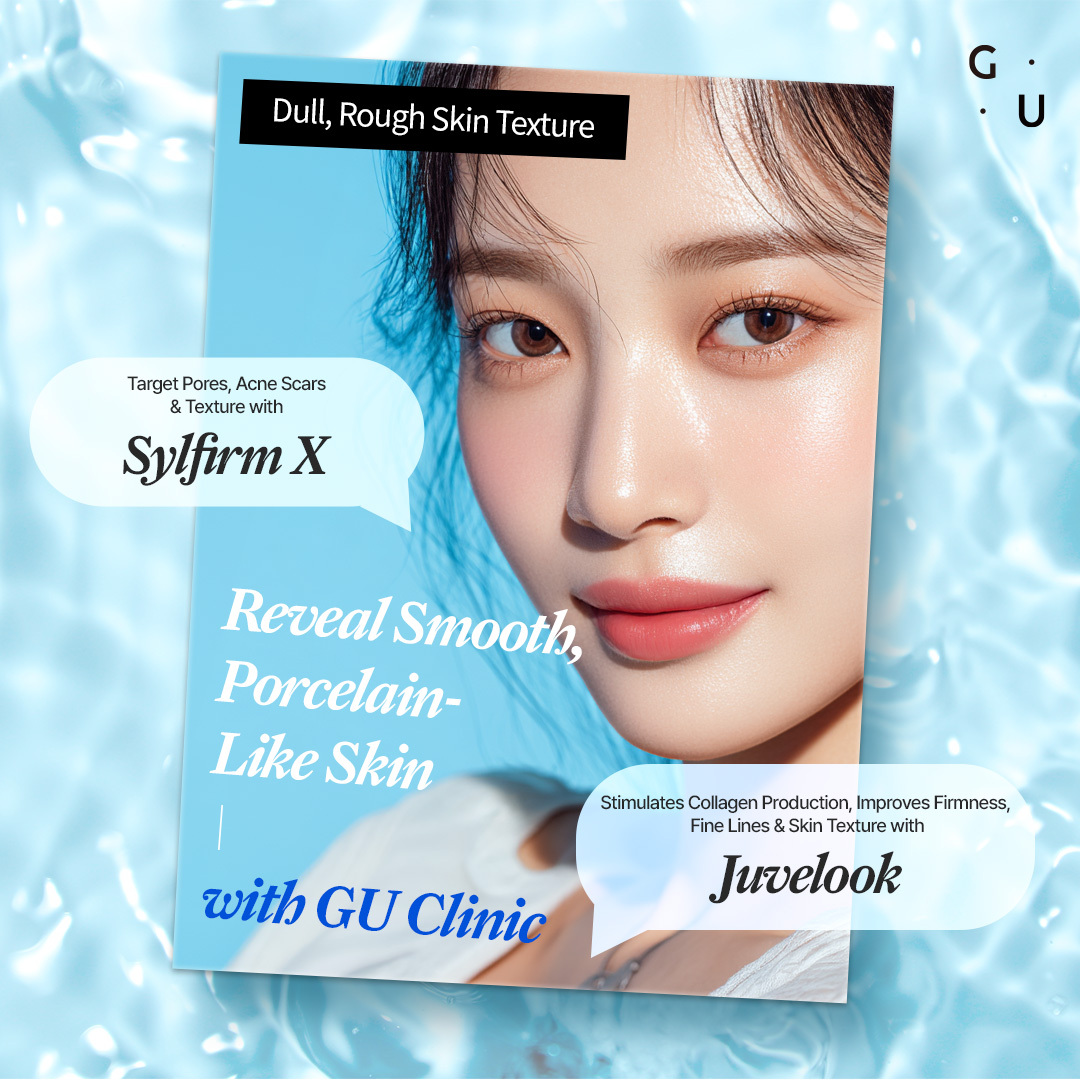
Dull, Rough Skin Texture
Reveal Smooth, Porcelain-Like Skin with GU Clinic
| Treatment | Benefits |
|---|---|
| Sylfirm X | Target Pores, Acne Scars & Texture |
| Juvelook | Stimulates Collagen Production, Improves Firmness, Fine Lines & Skin Texture |
Why Skin Texture Needs More Than One Approach
Rough, dull skin that won’t seem to improve? Discover a combined approach with Sylfirm X and Juvelook, targeting both skin structure and hydration.
Some days, makeup just doesn’t sit right. Your skin may suddenly look dull, rough, or less smooth than usual. |
|---|
It’s something most of us have experienced
at one point or another.
Even after switching up your skincare routine or investing more time
in at-home care, skin texture can be surprisingly difficult to improve.
That’s often when people begin looking into professional treatments
—only to find themselves overwhelmed by the number of options available.
The reason skin texture can be so stubborn is that
it isn’t always just a surface-level concern.
Both the underlying skin structure and hydration levels can affect
how smooth and healthy the skin appears.
Understanding what your skin actually needs is the first step
toward choosing the right approach.

"Why isn’t my skin texture improving?"
There are several reasons why skin may continue to
feel rough or uneven despite consistent care.
First, the concern may go deeper than the surface.
Exfoliating or smoothing the outermost layer of the skin alone may not be enough
when changes within the deeper layers are also affecting its appearance.
As collagen and elastin decline over time,
the skin’s underlying support structure can become weaker,
making it more difficult to achieve a consistently smooth appearance through surface care alone.
Second, uneven skin texture rarely has just one cause.
Enlarged pores, fine lines, redness,
and acne scars can all contribute to skin looking and feeling uneven.
Although these concerns are different,
together they may create the overall impression of rough or irregular skin texture.
Finally, skin structure and hydration are two different
—but closely connected—factors.
Even well-hydrated skin may still appear uneven
when its underlying support has weakened.
Likewise, skin with relatively good structural support can look dry
and rough when it lacks sufficient hydration.
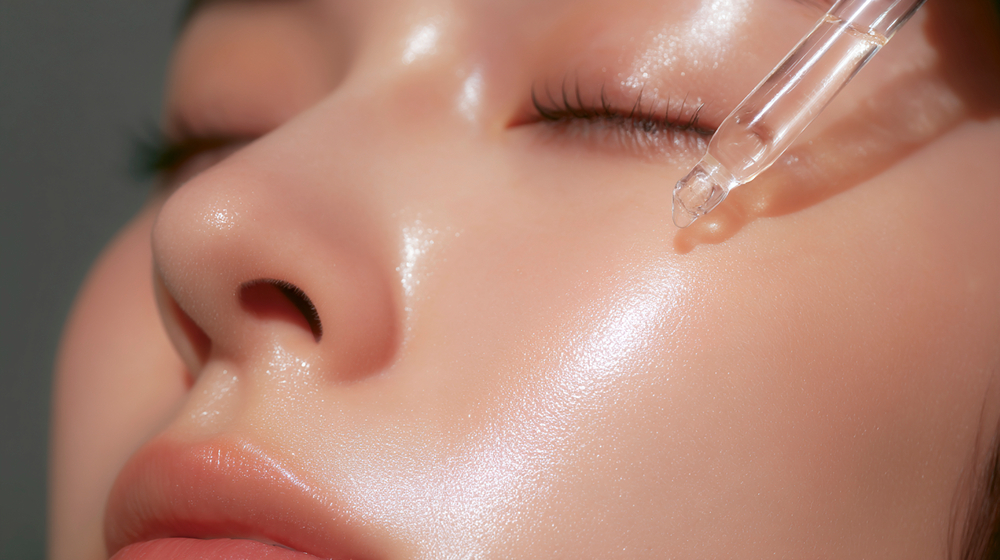
"Addressing Both Structure and Hydration"
Skin texture can be challenging to improve because it is rarely influenced by just one factor.
Both the skin’s structural support and hydration levels contribute to
its overall appearance, which is why identifying what your skin is lacking should come first.
Skin that needs greater structural support may require a different approach
from skin that primarily needs improvements in hydration and elasticity.
Rather than relying on a single treatment for every concern,
combining different approaches based on the individual condition
of the skin may offer a more balanced treatment plan.
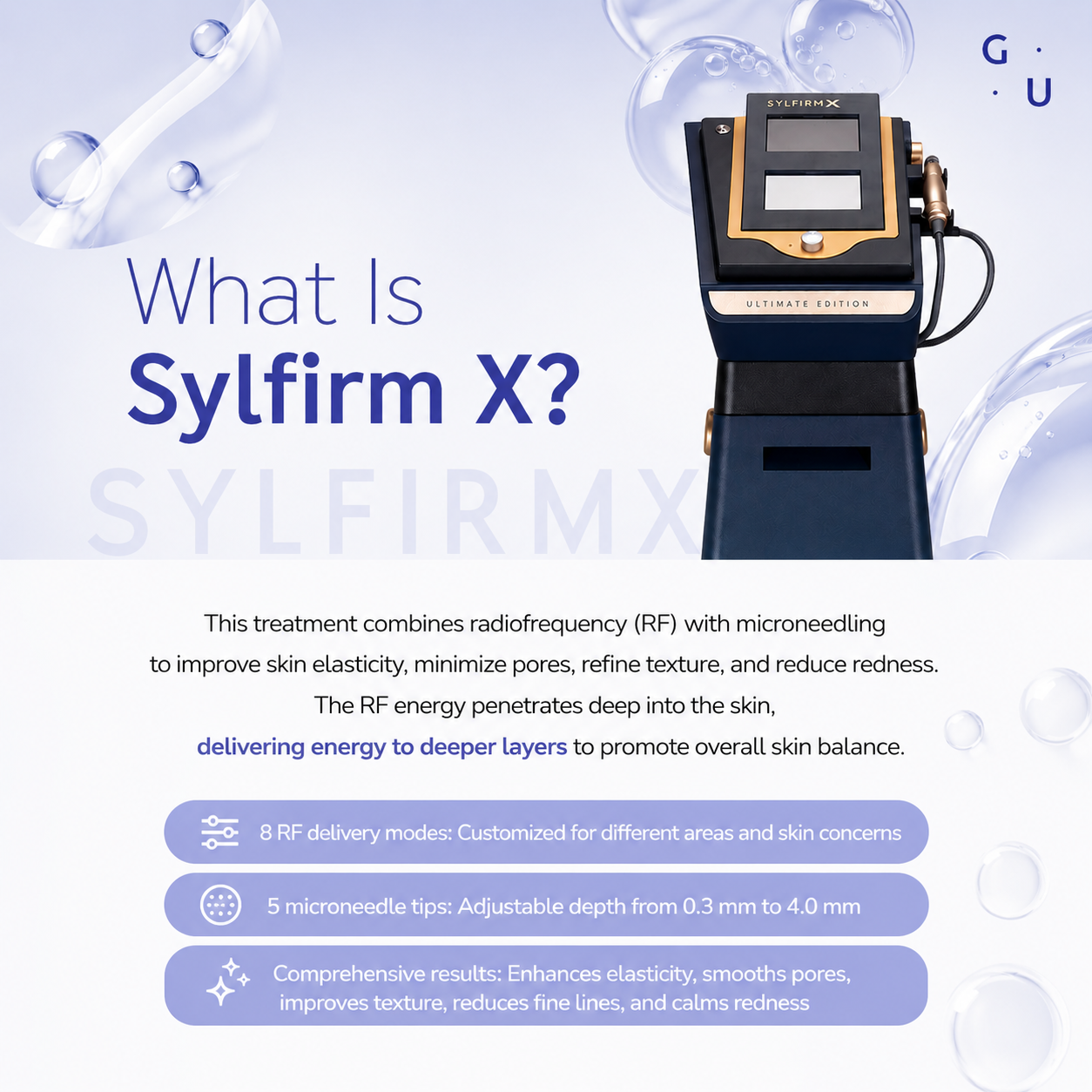
"Sylfirm X: Targeting Skin Structure with RF Energy"
Sylfirm X combines microneedling with radiofrequency (RF) energy
to target structural skin concerns such as enlarged pores,
uneven texture, and loss of firmness.
The treatment depth and RF settings can be adjusted
according to the individual skin condition.
By delivering controlled RF energy into the dermal layer,
Sylfirm X is designed to support collagen remodeling
and improve the overall skin environment.
As a result, it may help improve the appearance of
skin texture and firmness over time.
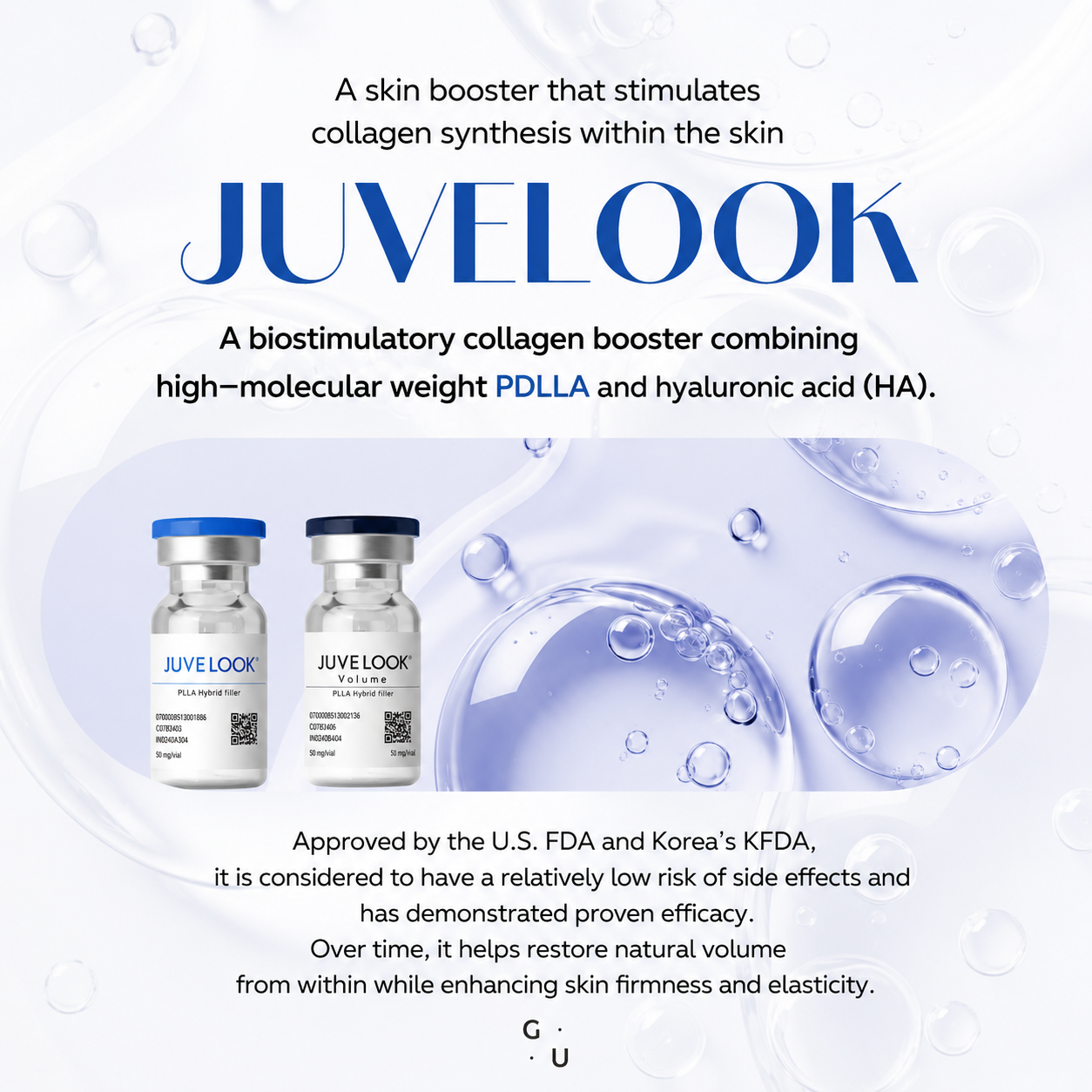
"Juvelook: Supporting the Skin from Within"
Juvelook is a biostimulatory skin booster that combines
PDLLA (poly-D,L-lactic acid) and hyaluronic acid (HA).
Unlike conventional fillers that are primarily used to create immediate volume,
Juvelook is designed to support gradual collagen production within the skin.
Its formulation allows it to be used across the skin to address concerns
such as uneven texture, enlarged pores, fine lines, and overall skin quality.
Rather than focusing only on immediate surface changes,
Juvelook is often chosen when the goal is to gradually
improve the skin’s overall condition over time.
"Why Combine Sylfirm X and Juvelook?"
Sylfirm X and Juvelook work through different mechanisms.
Sylfirm X uses microneedling and RF energy
to address the skin’s structural environment and firmness.
Juvelook, on the other hand, is used
to support collagen production and overall skin quality from within.
For patients with multiple skin texture concerns,
these two approaches may be considered together
depending on the condition of the skin.
However, combining treatments is not automatically the best option for everyone.
The more important question is whether your skin currently needs
greater structural support, improvements in hydration
and elasticity, or a combination of both.
"Considering Skin Texture Treatments
in Gangnam?"
Improving skin texture isn’t simply
about making the surface feel smoother.
For skin to appear healthy and refined,
structural support, hydration,
and elasticity all need to be considered together.
And every person’s skin is different.
Before choosing a specific treatment,
it is important to determine whether structural changes, hydration loss,
reduced elasticity, or multiple concerns are contributing
to the skin’s current condition.
Rather than deciding on a treatment first, start by asking:
What does my skin actually need right now?
That is where a more personalized approach to skin texture begins.
Dr. Ki-beom Park(Chief Medical Director) - B.S. in Biotechnology, College of Engineering, Yonsei University - M.D. Yonsei University College of Medicine - Adjunct Professor, Graduate School of Integrative Medicine, CHA University - Co-founder of Gangnam Unni, a medical aesthetics information platform - Operator of Healing Breeze, a medical service organization (MSO) - Developer of GENABELLE, a K-Derma cosmetics brand - Developer of the CELLORA of GU brand |