
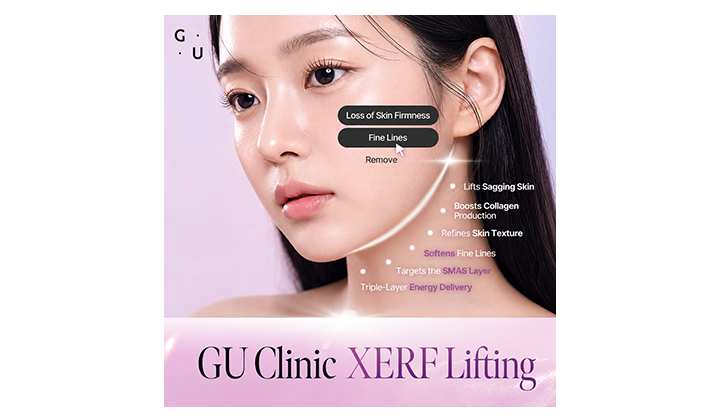
XERF RF Lifting FAQ: 4 Questions Patients Ask Most
Wondering if XERF RF Lifting is right for you? Learn about treatment areas, combination therapies, treatment planning, and why personalized settings matter more than shot count.
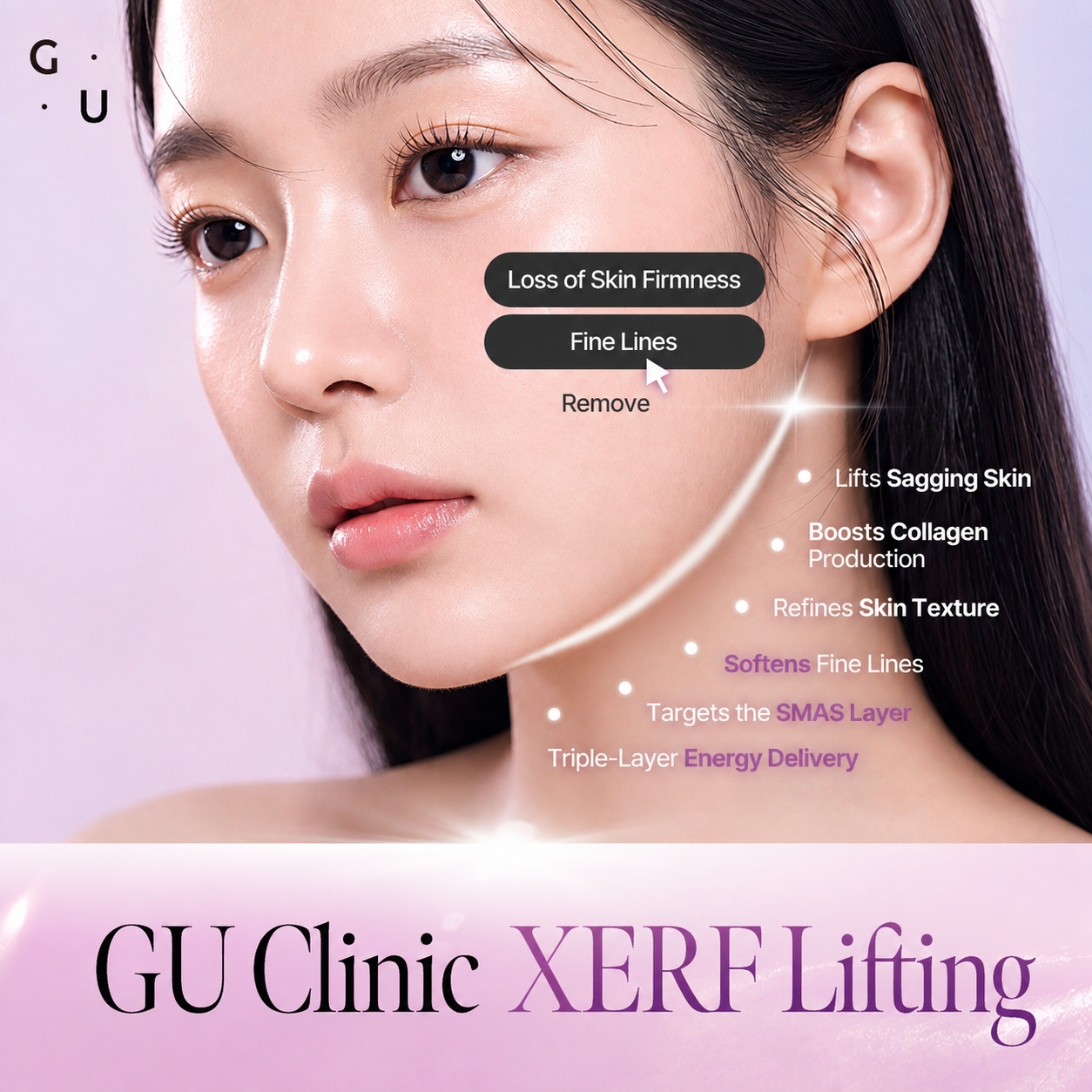
GLOW UP, GU CLINIC XERF Lifting Q & A |
During consultations about XERF lifting,
many patients tend to ask similar questions.
'Is XERF lifting alone enough?'
'Would it be better to combine it with fillers?'
'Will I get better results if I receive more lifting treatments?'
Even with the same XERF treatment,
the appropriate treatment depth and frequency may vary depending on
the patient’s skin condition and facial structure.
Today, we will answer some of the questions
we hear most frequently during consultations
and explain how XERF lifting works.
"XERF Lifting: Preserving the Benefits of
Thermage While Reducing Discomfort"
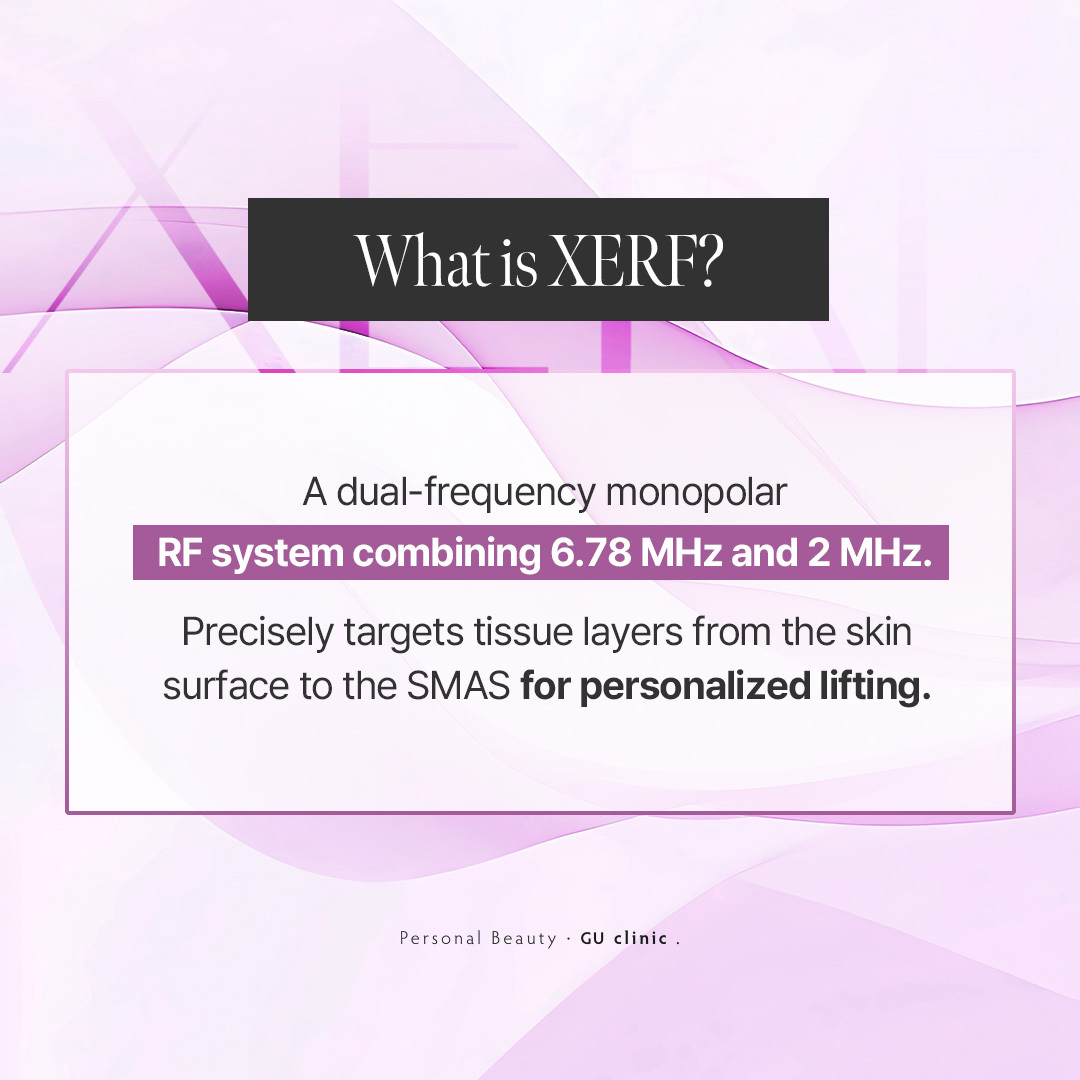
While conventional RF devices generally use a single frequency of
6.78 MHz, XERF incorporates an additional 2 MHz frequency
through a dual-frequency system.
The key feature is that these two frequencies deliver thermal energy
evenly across multiple tissue depths, from the upper dermis to
the subcutaneous layer and deeper fascial structures.
6.78 MHz for tightening: Delivers energy more precisely to
the superficial skin and dermal layers to improve firmness and skin texture.
2 MHz for contouring: Delivers thermal energy to deeper tissue layers.
XERF has gained attention as a next-generation RF lifting treatment
because it offers the skin-tightening benefits commonly associated with
Thermage while allowing energy to reach deeper layers.
It may also be considered for patients with naturally slim faces,
as treatment can be designed to minimize the risk of
creating a hollow-cheek appearance.
Rather than relying on a single frequency,
XERF combines two frequencies in a coordinated manner.
This approach is intended to improve collagen density
within the deeper skin structure without
unnecessarily targeting the facial fat layer.

"XERF Lifting Q1:
Can I See Results with XERF Alone?"
If you have begun to notice reduced skin firmness,
a less defined jawline, or early cheek sagging,
improvement may be possible with XERF lifting alone.
However, the same treatment approach is
not suitable for everyone.
When skin laxity is accompanied by facial volume loss,
lifting treatment alone may not fully address the patient’s concerns.

"XERF Lifting Q2:
Is It Helpful to Combine XERF
with Fillers?"
Many patients assume that lifting treatments
and fillers serve the same purpose,
but the two treatments work differently within the face.
XERF is used to lift and tighten tissue
that has gradually shifted downward,
while fillers are used to restore volume in areas
that have become hollow or depleted.
For example,
when volume has decreased in the anterior cheek or temple area,
lifting alone may not be sufficient to restore balanced facial dimension.
After evaluating the overall facial structure,
fillers may be added only to the areas
that require volume restoration.
Combining the two treatments appropriately can help address
both sagging and volume loss while creating
a more natural-looking result.

"XERF Lifting Q3:
Who Is a Suitable Candidate?"
XERF lifting may be considered for
patients with concerns such as:
*A jawline that appears less defined than before
*Cheek tissue that seems to have shifted downward
*Nasolabial folds that appear deeper
*Reduced skin elasticity and a less defined facial contour
However, when facial volume loss is a greater concern than skin laxity,
combining XERF with another treatment may be recommended.
"XERF Lifting Q4:
Are More Shots Always Better?"
When comparing 300 shots and 600 shots of XERF,
what matters most is not simply the number of
shots but how accurately the energy is delivered.
Through its dual-frequency system,
XERF allows the energy level and treatment depth to
be adjusted according to the patient’s skin condition
and the area being treated.
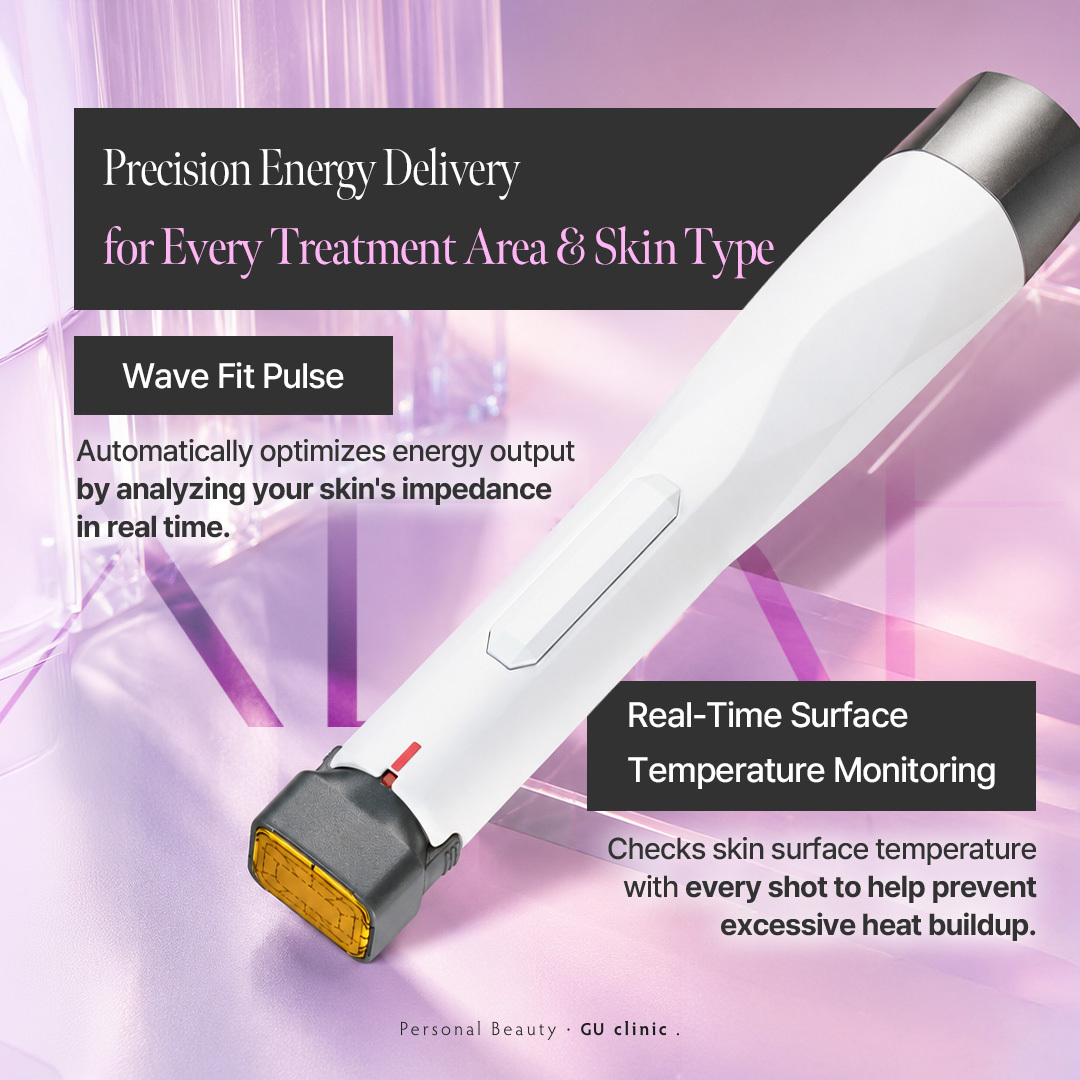
XERF also uses Wave Fit Pulse technology,
which analyzes skin impedance in real time.
During treatment,
the surface temperature is continuously monitored
so that energy can be delivered in a way that is appropriate
for the patient’s individual skin condition.
Rather than focusing only on stronger energy
or a higher number of shots, treatment should be planned according to:
*Facial structure
*Skin thickness
*Degree of skin laxity
*Treatment area
Ultimately, a personalized treatment design can have
a greater influence on patient satisfaction than shot count alone.

The results of XERF lifting ultimately depend on
the patient’s individual condition
and the way the treatment is designed.
Even when the same device is used,
the outcome may differ depending on
the practitioner’s assessment, technique, and energy settings.
For those considering XERF lifting in Gangnam,
it is important not to make a decision based on
general information alone.
We recommend receiving a thorough consultation at a clinic
that can develop an individualized treatment plan based on
your skin condition, facial structure, and aesthetic goals.
Thank you for reading.
Glow Up Clinic Seoul.
Dr. Ki-beom Park(Chief Medical Director) - B.S. in Biotechnology, College of Engineering, Yonsei University - M.D. Yonsei University College of Medicine - Adjunct Professor, Graduate School of Integrative Medicine, CHA University - Co-founder of Gangnam Unni, a medical aesthetics information platform - Operator of Healing Breeze, a medical service organization (MSO) - Developer of GENABELLE, a K-Derma cosmetics brand - Developer of the CELLORA of GU brand |