

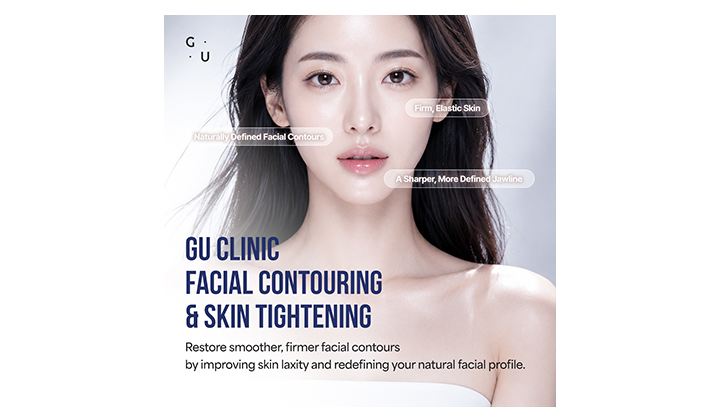
GU CLINIC FACIAL CONTOURING & SKIN TIGHTENING
Restore smoother, firmer facial contours by improving skin laxity and redefining your natural facial profile.
Key Benefits
- Naturally Defined Facial Contours
- Firm, Elastic Skin
- A Sharper, More Defined Jawline
A Year Later: Ultherapy PRIME & Thermage
Changes in your facial contour may go unnoticed in the mirror but become much clearer when you compare recent photos with older ones. Learn what causes facial laxity and how Ultherapy PRIME and Thermage can be used to address changes in facial definition.
G · U
Key Benefits
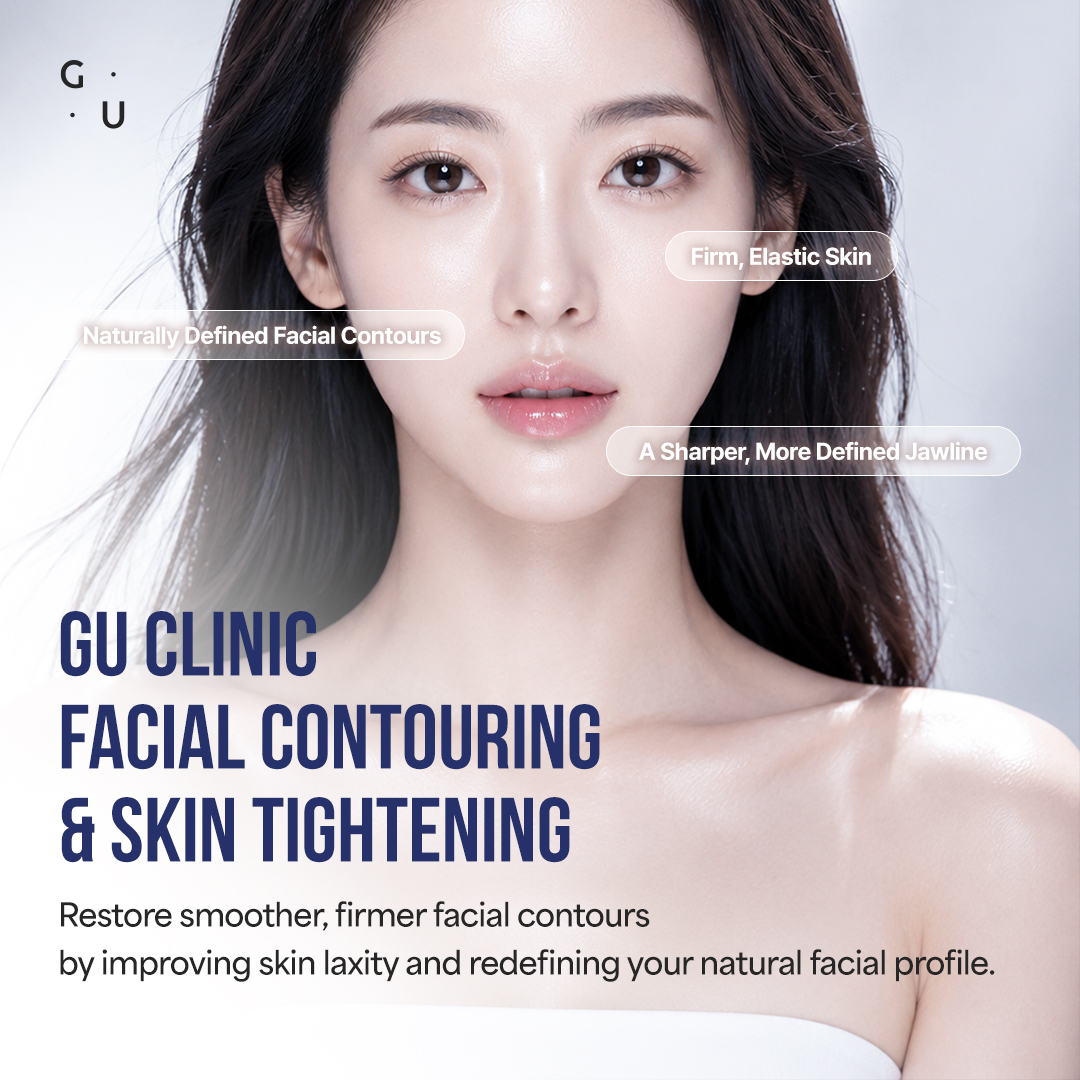
- Naturally Defined Facial Contours
- Firm, Elastic Skin
- A Sharper, More Defined Jawline
GU CLINIC FACIAL CONTOURING & SKIN TIGHTENING
Restore smoother, firmer facial contours by improving skin laxity and redefining your natural facial profile.
"Has a Photo from a Year Ago
Ever Looked Unfamiliar?"
While scrolling through your phone, you may find yourself pausing at a photo taken a year ago.
Nothing significant has happened to change your appearance,
yet your jawline looks more defined in the photo,
and the area around your mouth seems subtly different.
Still, the face you saw in the mirror this morning may not look much different from yesterday.
Changes in facial definition rarely happen overnight.
As the skin gradually loses elasticity and the tissues
around the cheeks and jaw begin to shift downward,
the change can be difficult to notice when you see your face every day.
A photograph, however, captures your appearance at a specific point in time.
Comparing older and recent photos taken from similar angles and with similar expressions
can make changes in the jawline, lower face, and cheek position easier to recognize.
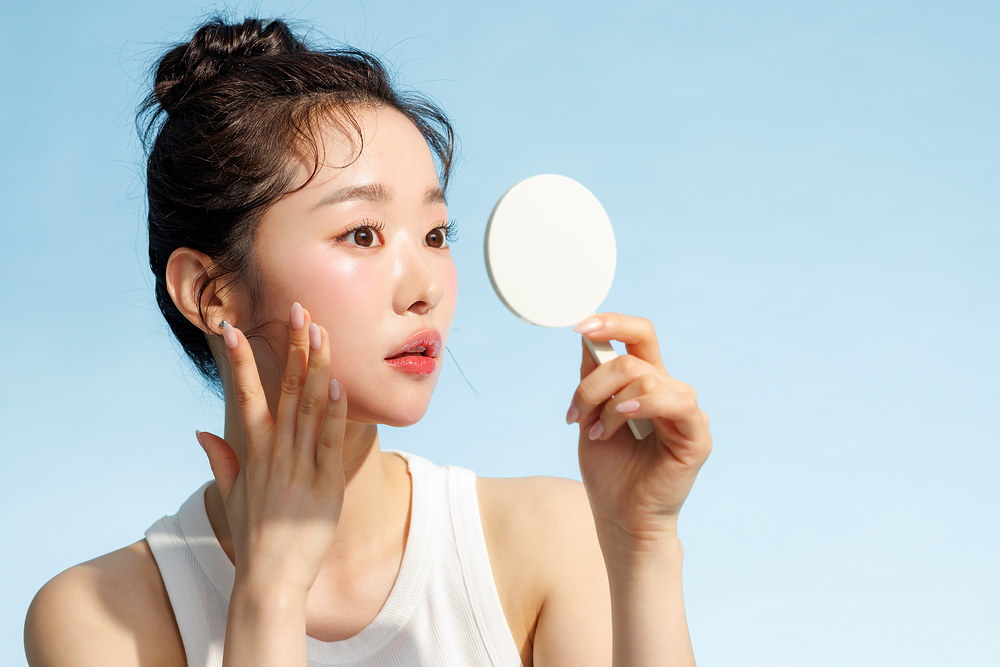
"Why Are These Changes
So Difficult to Notice in the Mirror?"
Our eyes quickly adapt to small changes in familiar faces.
Because there is rarely a noticeable difference from one day to the next,
a gradual loss of facial definition can begin to feel normal.
No single factor is responsible for changes in the facial contour.
As collagen and elastin levels decline with age,
the skin may gradually lose density and elasticity.
Changes in the deeper supporting tissues, the position of facial fat,
skin thickness, and lifestyle habits can also affect the cheeks and jawline.
Even among people of a similar age, these changes do not always appear in the same way.
Those with thinner skin may notice fine lines and laxity earlier,
while heavier cheek tissue may gradually shift downward and make the jawline appear less defined.
A visible difference between older and recent photos
does not automatically indicate one specific treatment.
It is important to determine whether the main concern comes from reduced skin elasticity,
changes in deeper support, or the position and weight of facial tissue.
Personal Beauty · GU clinic
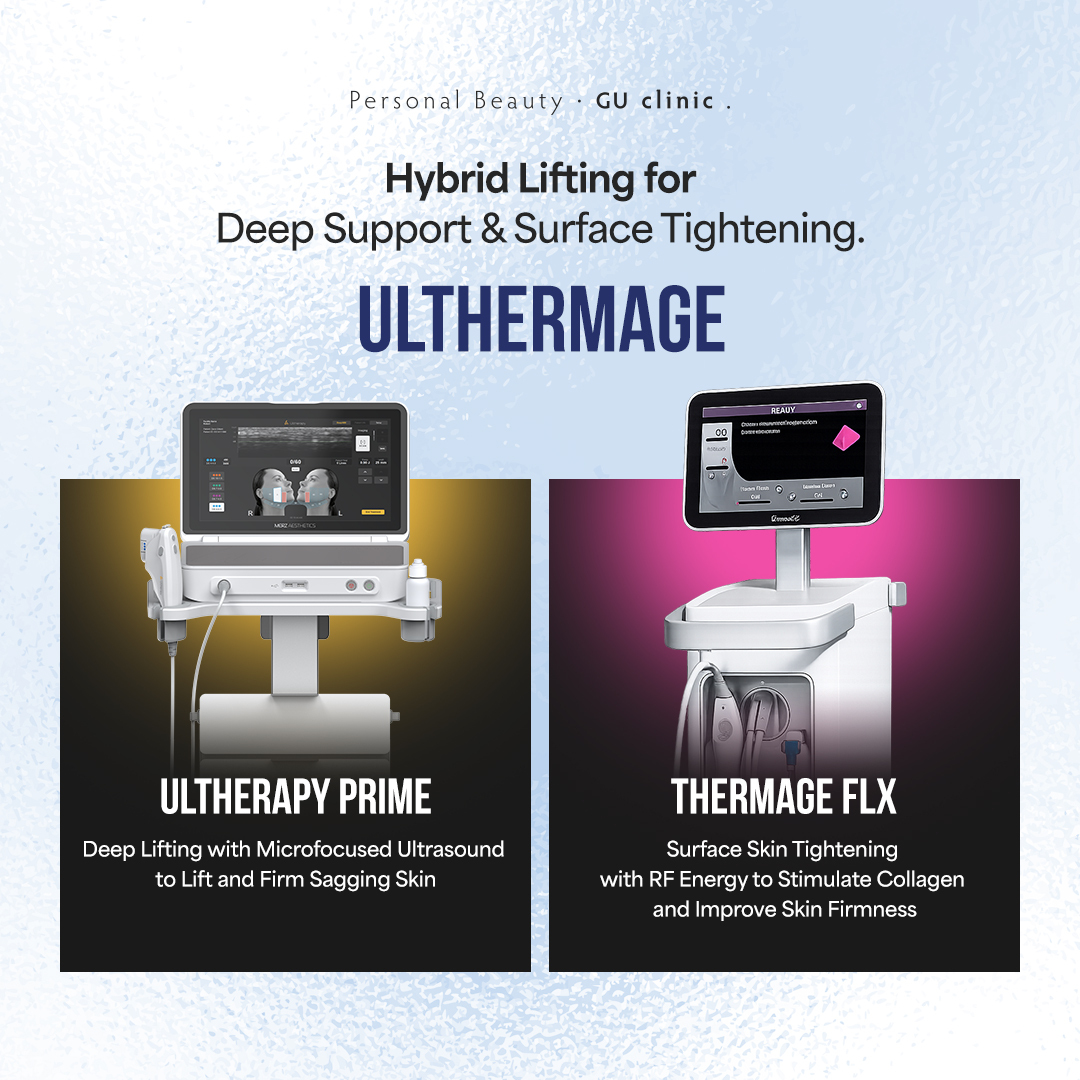
Hybrid Lifting for Deep Support & Surface Tightening.
ULTHERMAGE
| Product Name | Description |
|---|---|
| ULTHERAPY PRIME | Deep Lifting with Microfocused Ultrasound to Lift and Firm Sagging Skin |
| THERMAGE FLX | Surface Skin Tightening with RF Energy to Stimulate Collagen and Improve Skin Firmness |
"Different Layers May Require
Different Approaches"
When changes are present both at the skin’s surface
and within its deeper layers, treatments targeting different depths may be considered.
Ultherapy PRIME: Uses real-time ultrasound imaging to visualize the treatment area while delivering microfocused ultrasound energy to selected depths, including the deeper supporting layers. It may be considered when laxity and reduced definition around the cheeks and jawline are the primary concerns.
Thermage FLX: Delivers radiofrequency energy into the dermal layer to create a controlled thermal response and support collagen remodeling. It may help improve the appearance of skin firmness, fine lines, texture, and overall smoothness. (👉 Learn More About Thermage FLX)
The two treatments use different types of energy and target different tissue depths.
Ultherapy PRIME may be considered when laxity in the deeper supporting layers is the main concern,
while Thermage FLX may be selected when reduced skin density and elasticity are more prominent.
When changes are present across multiple layers,
Ultherapy PRIME and Thermage FLX may be combined.
The energy level and treatment area should be tailored
to the individual’s facial structure and skin condition.
"Aftercare Is an Important Part of Facial Contouring"
Ultherapy PRIME and Thermage FLX are performed without incisions.
However, temporary redness, swelling, warmth, or tenderness may occur after treatment.
The type and duration of these reactions can vary depending on skin sensitivity and the energy applied.
After treatment, avoid placing unnecessary pressure or irritation on the skin.
Gentle cleansing and adequate moisturization can help keep the treated area comfortable.
Apply sunscreen carefully before going outdoors. Saunas, steam rooms,
prolonged heat exposure, and alcohol should be avoided for several days.
Refrain from pressing firmly on or massaging the treated area.

Not every change in facial definition requires a combined
Ultherapy PRIME and Thermage treatment.
Skin thickness, the degree of elasticity,
facial fat distribution, and where the laxity begins
all influence which device and treatment area may be appropriate.
If you notice a difference in your jawline or lower face
when comparing older and recent photos,
begin by identifying what may be causing the change.
Thank you for reading.
This has been GU Clinic.
Dr. Ki-beom Park(Chief Medical Director) - B.S. in Biotechnology, College of Engineering, Yonsei University - M.D. Yonsei University College of Medicine - Adjunct Professor, Graduate School of Integrative Medicine, CHA University - Co-founder of Gangnam Unni, a medical aesthetics information platform - Operator of Healing Breeze, a medical service organization (MSO) - Developer of GENABELLE, a K-Derma cosmetics brand - Developer of the CELLORA of GU brand |