

PRP vs. Blood-Derived Stem Cells
Both PRP and blood-derived stem cell therapy are derived from the patient's own blood, but they work through different regenerative mechanisms. Choosing the right treatment depends on your condition and treatment goals.
"Aren’t PRP and blood-derived
stem cell treatments essentially the same?"
This is a question we hear often.
Because both treatments use components obtained
from your own blood,
many people assume they are the same.
In practice, however,
they differ in how they support regeneration
and in the scope of their approach.
Rather than deciding that one is better than the other,
it is important to understand their individual features
and choose an option that suits your condition and treatment goals.
"Understanding PRP Treatment"
PRP treatment begins with a sample of your own blood.
Platelet-rich plasma is then separated and concentrated
before being applied to the area requiring treatment.
PRP contains a range of growth factors
that are involved in cell proliferation, new blood vessel formation,
and collagen production.
It is used in a variety of fields, including
skin regeneration, tissue recovery, and hair-loss treatment.
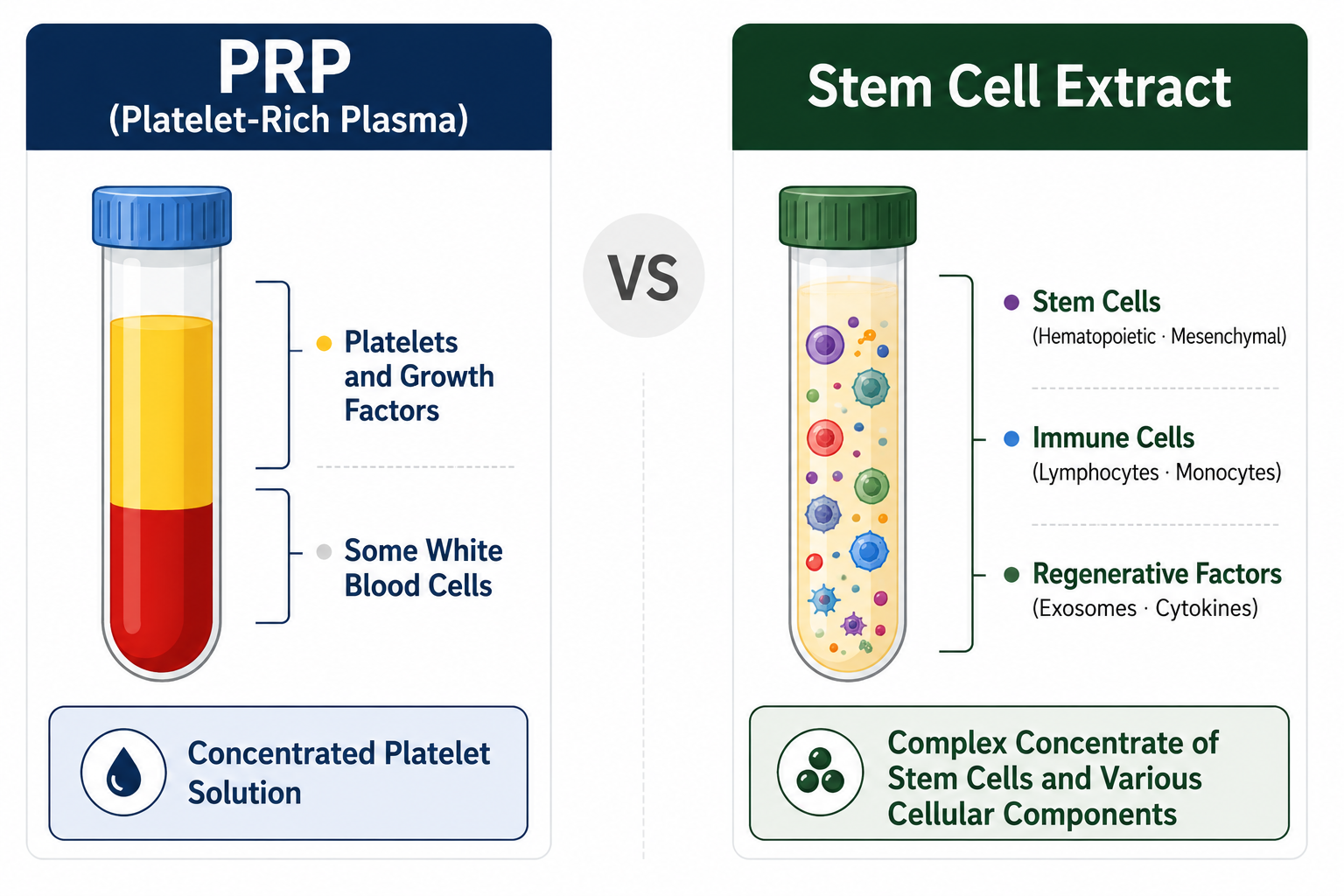
"How PRP and Blood-Derived
Stem Cells Differ"
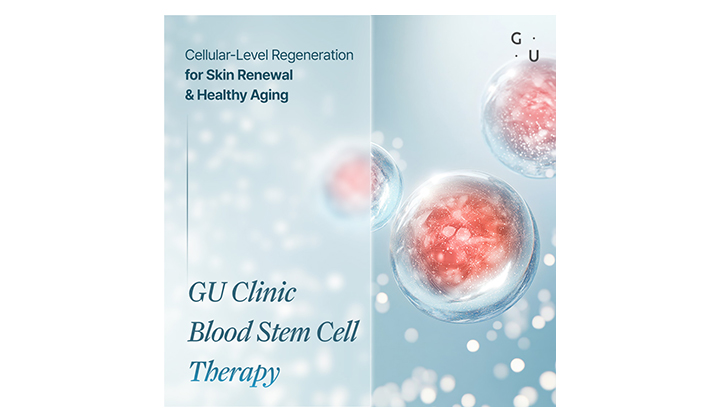
Like PRP, blood-derived stem cell treatment
uses components collected from the patient’s own blood,
but it supports regeneration through a different approach.
In addition to the activity of growth factors,
it considers the interaction between cell-to-cell signaling
and the surrounding regenerative environment.
Stem cells release bioactive substances, cytokines,
and growth factors while continuously exchanging signals
with nearby cells.
Through these interactions, treatment is intended to support
the body’s natural tissue-repair processes,
which is a key feature of the blood-derived stem cell approach.
In other words, rather than directly creating new tissue,
the aim is to support the body’s own recovery processes
so they can proceed more effectively.
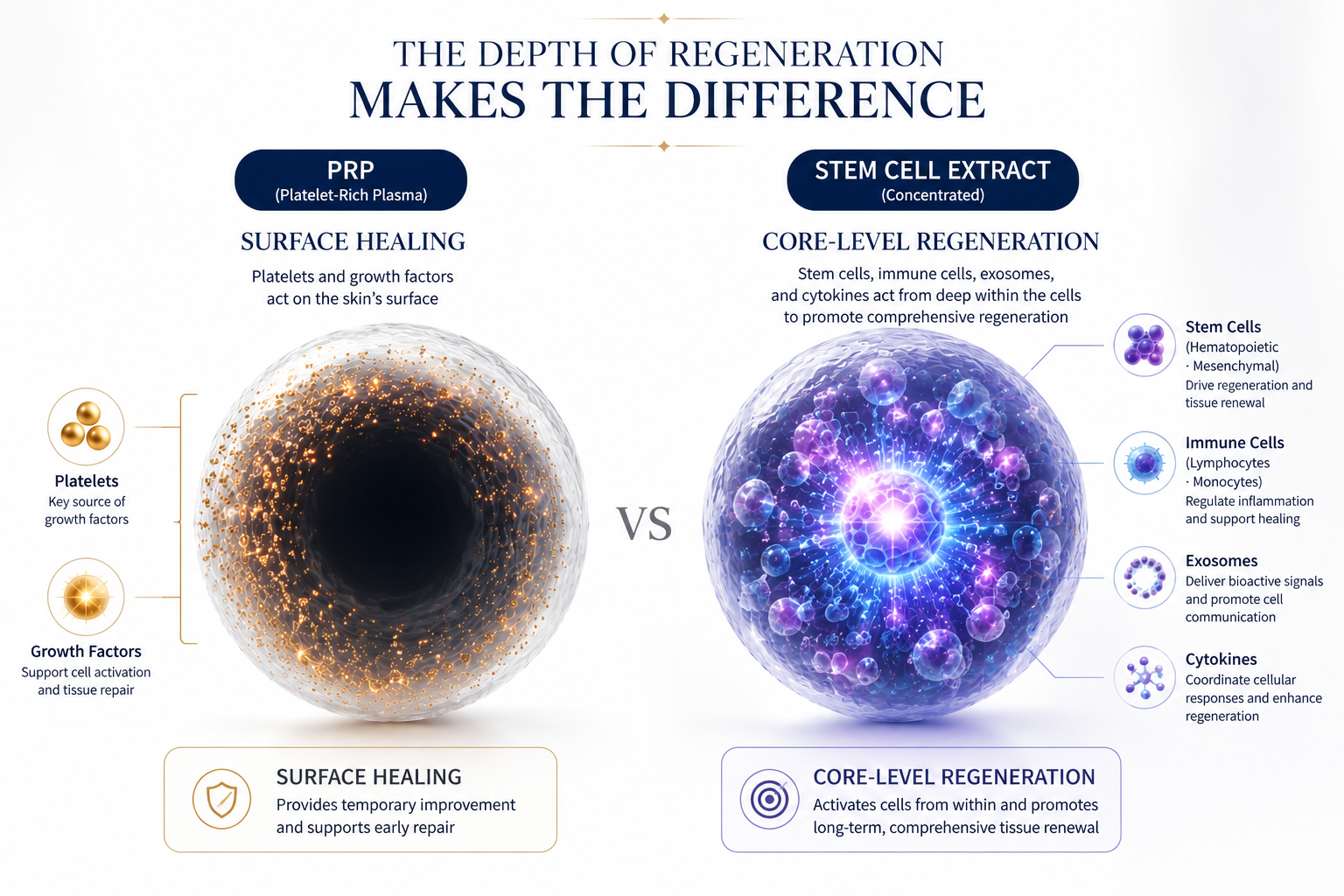
"A Different Depth of
Regenerative Support"
Beyond differences in growth factors,
the two treatments also take a different view of regeneration.
PRP primarily focuses on growth factors
to support tissue recovery.
Blood-derived stem cell treatment also considers cell signaling,
immune regulation, and the regenerative environment,
and may be used to support the broader recovery process.
Put simply,
if PRP provides signals that help initiate recovery,
blood-derived stem cell treatment also considers the environment
in which those regenerative signals need to function.
It Is Not About Choosing a “Better” Treatment
There is no single answer
to the question of which treatment
is universally better or worse.
Inflammatory status, metabolic balance, and overall health
should be assessed first
before selecting the approach that best suits the individual.

PRP may be appropriate for one person,
while blood-derived stem cell treatment
may be more suitable for another.
What matters most is developing an appropriate treatment plan
based on a thorough medical evaluation.
Assessing Your Internal Environment
to Support Healthy Cellular Function
As interest in regenerative medicine grows,
the focus of treatment is gradually changing.
Understanding the environment in which cells function
has become an important consideration
when identifying a suitable treatment approach.
Is inflammation being properly regulated?
Is cell-to-cell signaling functioning smoothly?
Is tissue homeostasis being maintained?
Evaluating the body’s current internal environment
is an important direction in regenerative medicine.
Because these treatments differ in their mechanisms and goals,
identifying the type of recovery support you need
is the first step in planning regenerative treatment.
Thank you for reading.
GU Clinic.
Yoon Chae Na, M.D. - Board-Certified Family Medicine Physician - M.D., Yonsei University College of Medicine - Adjunct Professor, Graduate School of Integrative Medicine, CHA University - Board Member, Korean Society of Liposuction Surgery - Vice Chair, Korean Society for Stem Cell Research (KSSCR) - Former Professor, Health & Life Center, CHAUM Clinic, CHA University - Former Director, Integrative Immunity & Stem Cell Center, CHAUM, CHA Biotech - Former Deputy General Manager, Global Bio Business Division, Seegene Inc. - Former Medical Director, 365mc Hospital |