


Stem Cell Therapy at GU CLINIC
Supporting Your Body's Natural Recovery Balance
Rather than replacing what is lacking, we focus on restoring balance and supporting the body's natural recovery process.
Korea vs. Japan Stem Cell Therapy
Discover the key differences in regenerative medicine regulations, cell culture, and administration between Korea and Japan.
Stem Cell Therapy at GU CLINIC
Supporting Your Body's Natural Recovery Balance
Rather than replacing what is lacking, we focus on restoring balance and supporting the body's natural recovery process.
Stem cell treatments are attracting growing interest,
and many patients wonder how treatment systems differ between Korea and Japan.
Because cell culture is permitted in Japan under specific regulatory pathways,
it is easy to assume that treatment there must be more effective.
However, the differences between the two countries cannot be explained
by technology or treatment superiority alone.
The key distinction lies in the legal procedures and oversight systems
governing how stem cells are collected, processed, and administered to patients.
Even when treatments share the same “stem cell therapy” label,
the type of cells used, processing methods, treatment goals,
and permitted applications may differ.
Before comparing countries,
it is important to understand how the cells are handled and regulated.
"Are Stem Cell Treatments
in Japan More Effective?"
Based on the evidence currently available,
it is difficult to conclude that stem cell treatments performed
in Japan are more effective than those provided in Korea.
Treatment outcomes may be influenced by multiple factors,
including the patient’s age and health, the purpose of treatment,
the characteristics of the cells used, how they are collected and processed,
the route of administration, and the number of treatment sessions.
The fact that cells have been cultured
does not determine the treatment outcome on its own.
Even when the same treatment method is used,
individual responses may vary depending on
the patient’s overall health and stage of disease.
The more meaningful questions are not simply
where the treatment is performed, but which cells are used,
why they are being administered,
and how the entire process is managed.
"How Do Stem Cell Treatments
Differ Between Korea and Japan?"
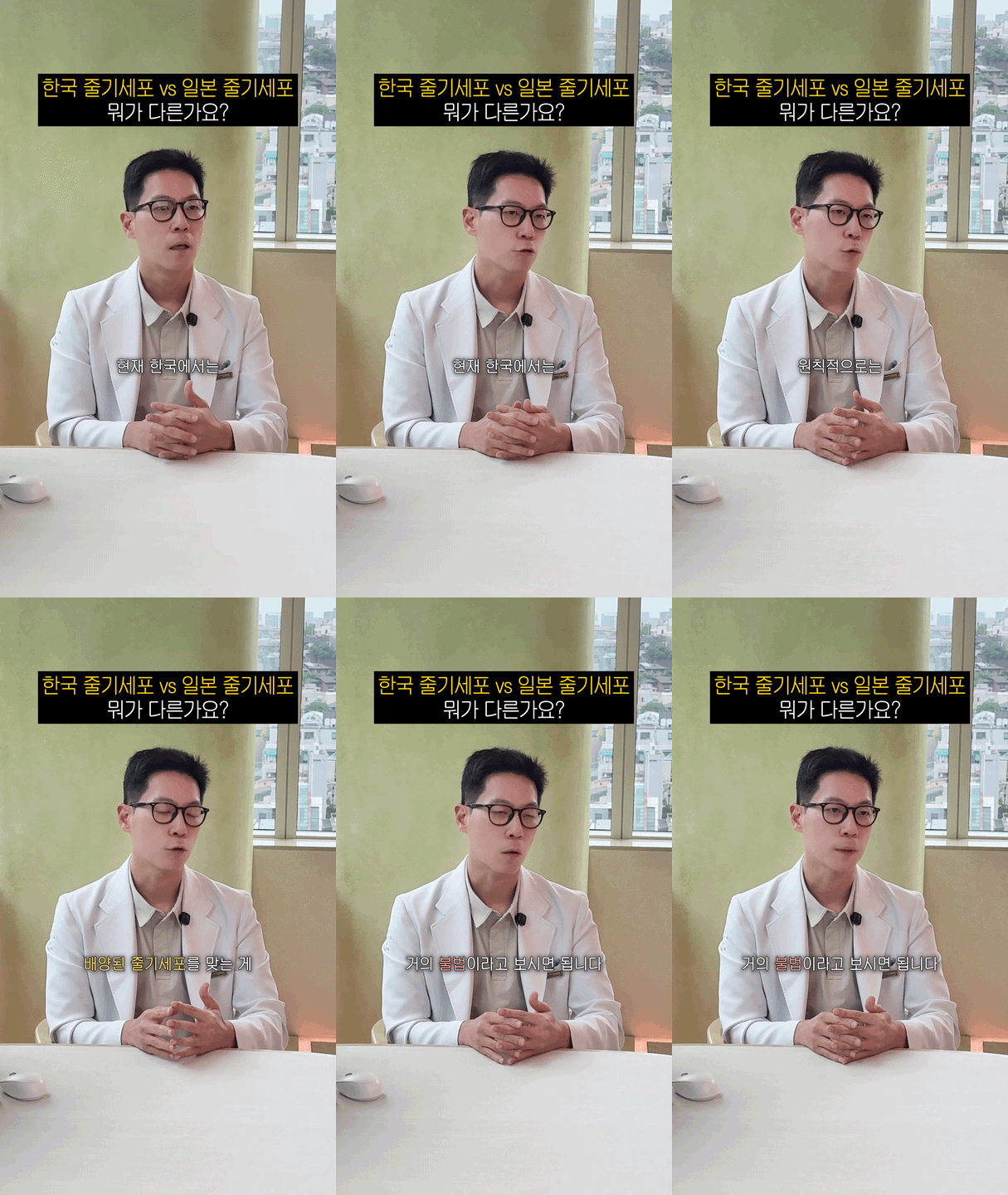
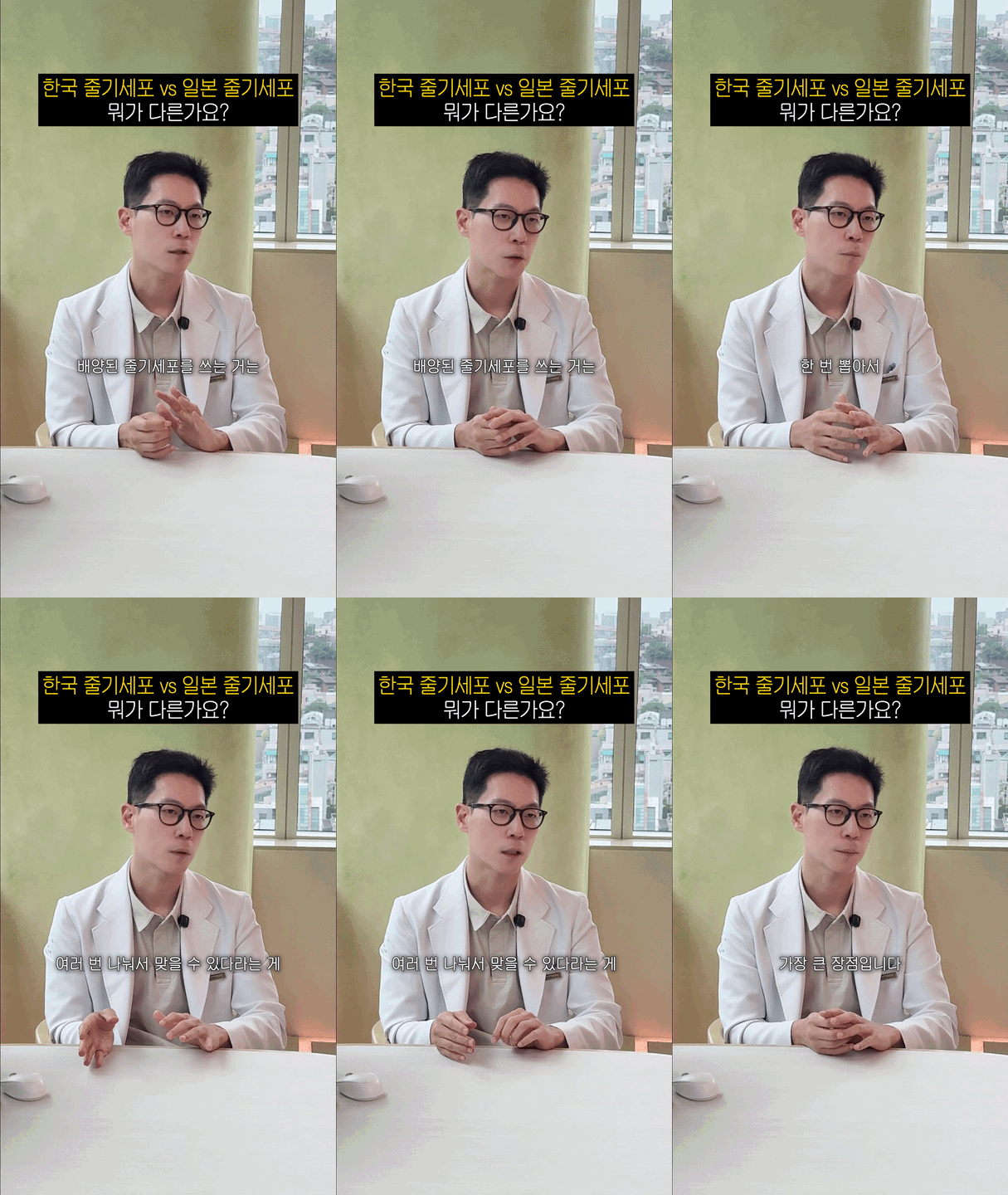
One of the clearest differences between the two countries is whether
stem cells may be expanded through culture before being administered.
In Korea,
healthcare providers generally cannot culture stem cells collected
from a patient and reinfuse them at their own discretion as part of routine clinical care.
Most commonly available procedures involve collecting, isolating,
and processing the patient’s cells without culture expansion before administration.
The use of cultured cells is limited to pathways
that meet specific regulatory requirements,
such as approved regenerative medicine treatment plans, clinical trials,
or authorized advanced biopharmaceutical products.
In Japan, cultured stem cells may be used for treatment
when the provider complies with the procedures established
under the country’s regenerative medicine regulations.
"Does Cell Culture Make
a Treatment Better?"
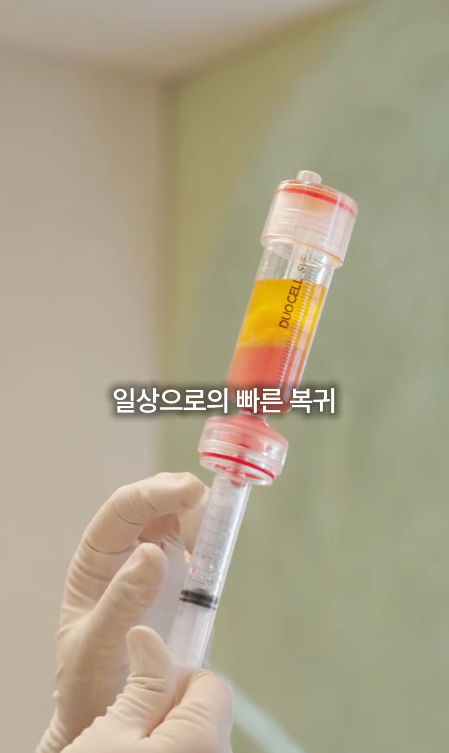
Cell culture allows collected stem cells to be expanded to a targeted quantity.
This may lead to the assumption that a higher
cell count automatically means a better treatment.
However, whether cells have been cultured is not enough to
determine the effectiveness or safety of a treatment.
For stem cell treatments in Japan,
it is important to consider the environment in which
the cells were cultured, how quality was controlled during processing,
and whether the facility met the relevant regulatory standards.
Even when the same type of cultured stem cell is used,
the treatment process may vary according to the patient’s age and health,
the culture method and duration, and the intended treatment goal.
Cell culture alone does not establish the overall quality of a treatment.
What matters is whether the treatment plan is appropriate for
the individual and whether each stage is managed according to
suitable medical and safety standards.
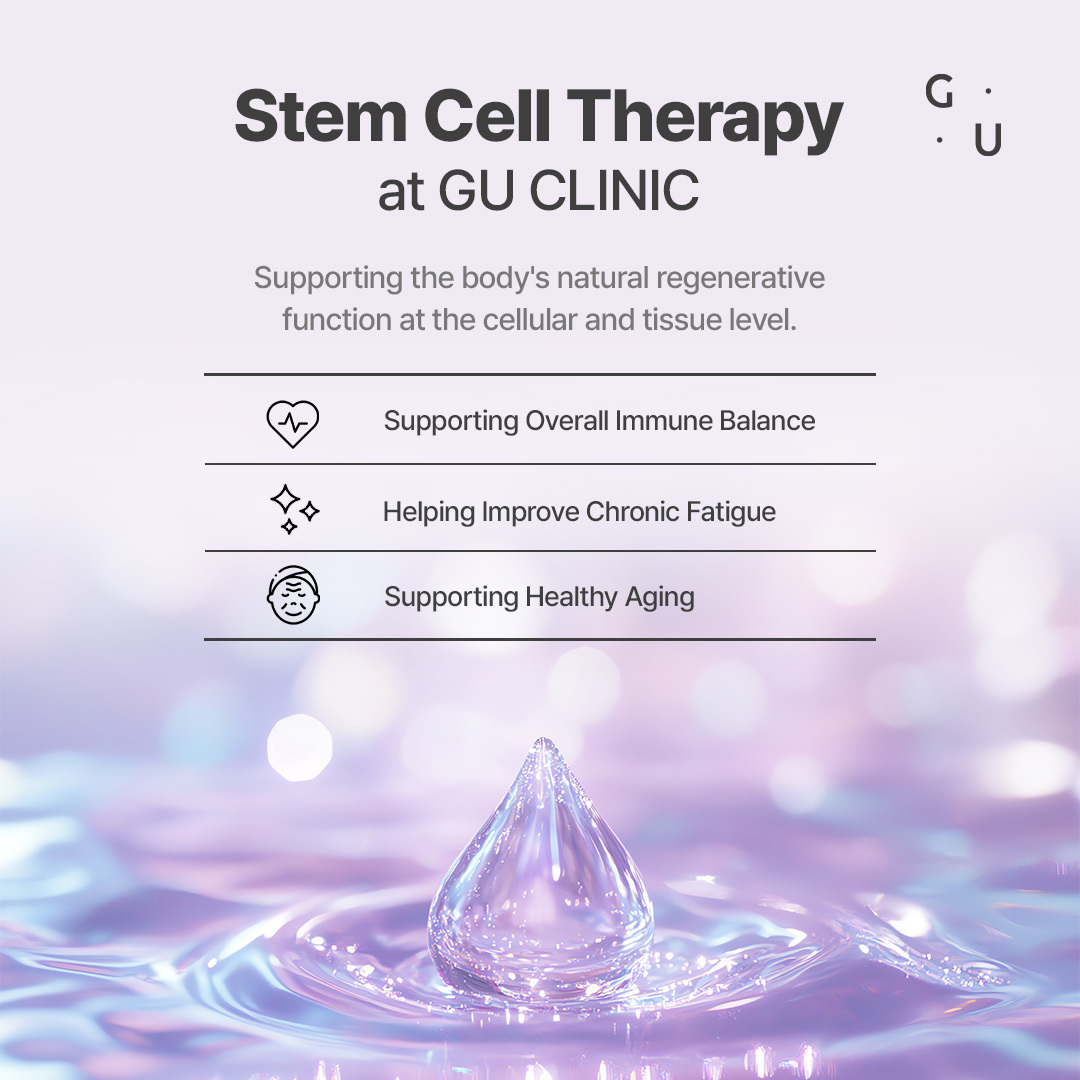
Stem Cell Therapy at GU CLINIC
Supporting the body's natural regenerative function at the cellular and tissue level.
Benefits
- Supporting Overall Immune Balance
- Helping Improve Chronic Fatigue
- Supporting Healthy Aging
"What Matters Most in
Stem Cell Treatment?"
The regulatory differences between
stem cell treatments in Korea and Japan are clear.
However, cultured stem cells should not
automatically be considered the better option.
Before proceeding, patients should confirm
whether the proposed treatment is appropriate for their needs,
what standards are followed, and how the cells
and overall treatment process are managed.
👉 Learn More About the Stem Cell Treatment Process

Self check-in
Korea and Japan follow different legal
and regulatory frameworks for regenerative medicine.
These regulatory differences do not necessarily
indicate a difference in treatment effectiveness.
If you are considering stem cell treatment in Japan,
check whether the provider has completed the required treatment-plan procedures,
where and how the cells are processed, and whether the potential benefits,
limitations, and risks have been clearly explained.
The same principle applies when considering stem cell treatment in Gangnam.
Cell quantity or culture expansion should not be the first and only criteria.
The process should begin with an evaluation of your current health,
treatment goals, and eligibility, followed by an individualized plan developed
within the applicable regulatory framework.
Yoon Chae Na, M.D. - Board-Certified Family Medicine Physician - M.D., Yonsei University College of Medicine - Adjunct Professor, Graduate School of Integrative Medicine, CHA University - Board Member, Korean Society of Liposuction Surgery - Vice Chair, Korean Society for Stem Cell Research (KSSCR) - Former Professor, Health & Life Center, CHAUM Clinic, CHA University - Former Director, Integrative Immunity & Stem Cell Center, CHAUM, CHA Biotech - Former Deputy General Manager, Global Bio Business Division, Seegene Inc. - Former Medical Director, 365mc Hospital |